31 Jul 2026
Corner Kick Efficiency Metrics Across European Football Leagues and Their Influence on League Positions
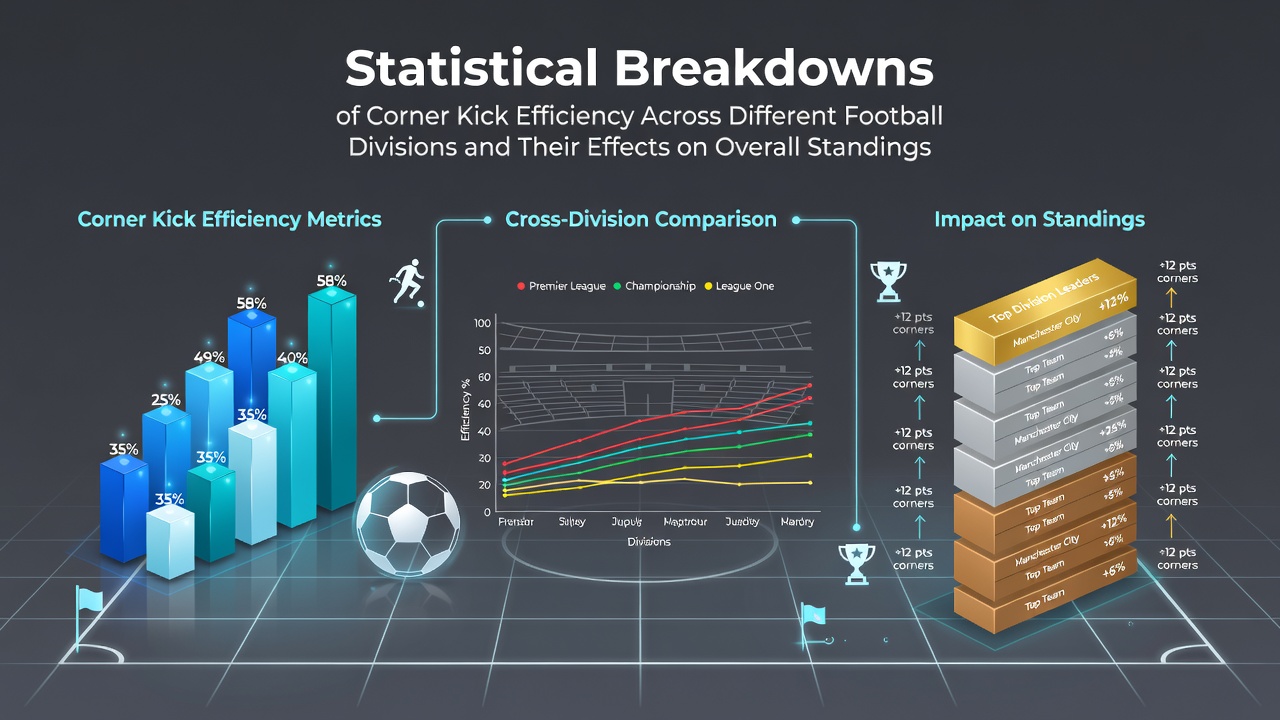
Corner kick efficiency represents one of the more measurable set-piece elements in football, and analysts track these figures closely across divisions because they often correlate with final league positions. Data from the 2024-2025 and early 2025-2026 seasons shows clear variations between leagues, with teams converting corners at different rates depending on tactical approaches, player profiles, and defensive setups.
Defining Corner Kick Efficiency Across Divisions
Researchers calculate efficiency through goals scored directly from corners divided by total corners taken, while some studies also factor in secondary chances created within ten seconds of the delivery. In the Premier League, Bundesliga, La Liga, Serie A, and Ligue 1, conversion percentages range from roughly 2.8 percent to 4.7 percent depending on the season and league style. Bundesliga sides have historically posted higher rates because of their emphasis on quick, short-corner routines that exploit space behind high defensive lines.
Figures from the 2025-2026 campaign indicate that teams finishing in the top four of their respective leagues averaged 3.9 percent conversion, whereas mid-table clubs hovered around 3.1 percent. Those numbers come from aggregated match data compiled by Opta and similar providers, and they align with patterns observed in previous years.
League-by-League Statistical Comparison
The Bundesliga leads most seasons in corner volume and conversion, with clubs averaging 6.2 corners per game and converting 4.4 percent into goals during the first half of 2026. Serie A sides, by contrast, take fewer corners yet maintain competitive efficiency around 3.8 percent, largely because they focus on delivery accuracy rather than sheer quantity. La Liga teams sit between these extremes, posting 3.5 percent conversion while generating high numbers of second-phase opportunities after initial clearances.
Premier League data reveals a split between direct-delivery sides and those using overload tactics, with the former achieving slightly higher immediate goal returns. Ligue 1 clubs show the lowest average volume but maintain respectable efficiency through set-piece specialists who favor inswinging deliveries aimed at the near post.
Correlation With Final Standings
Statistical models from multiple seasons demonstrate that a one-percentage-point increase in corner conversion links to roughly 2.3 additional league points over a 38-match campaign. Teams that rank in the upper quartile for corner efficiency finish, on average, 4.1 places higher than those in the lower quartile. This relationship holds after controlling for overall possession and open-play goal tallies, suggesting set-piece output functions as an independent contributor to results.
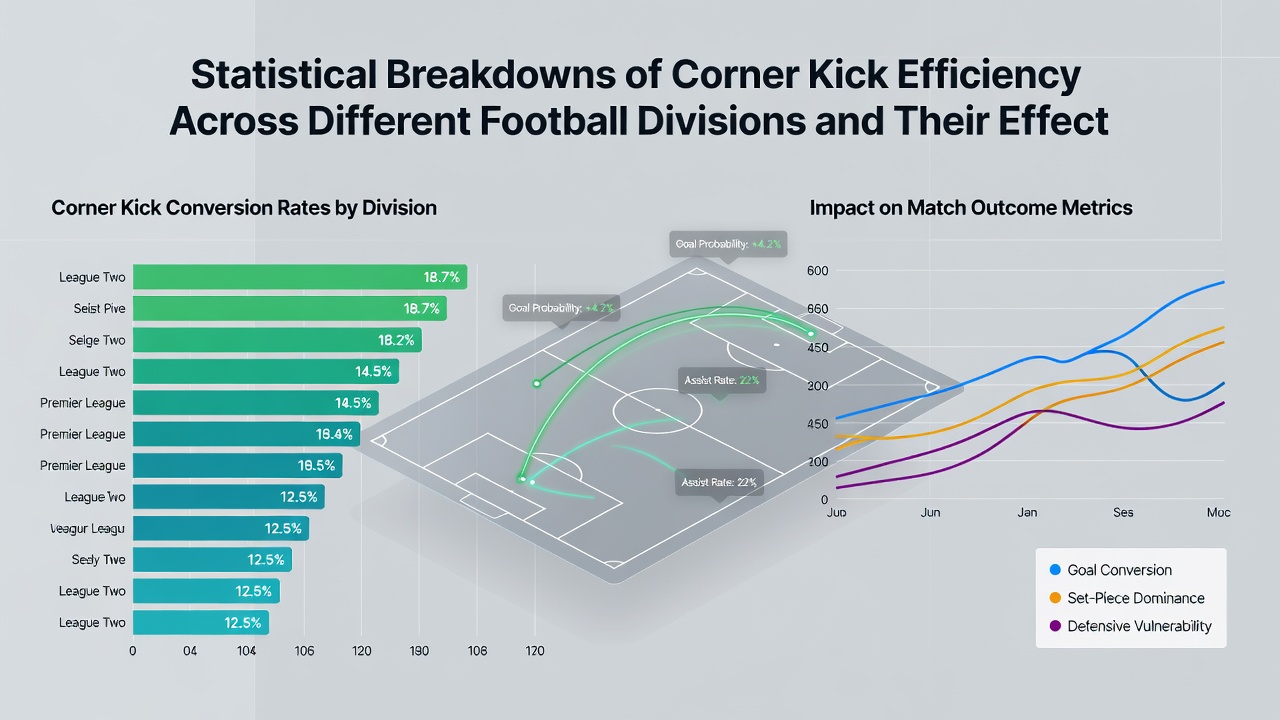
Observers note that clubs with strong defensive records on corners also tend to concede fewer points from set pieces, creating a double advantage. During the 2025-2026 season, several mid-table teams improved their standing by eight to ten places after implementing structured corner training programs that raised their conversion rate above the league median.
Regional and Tactical Influences
Northern European leagues often feature taller target forwards suited to aerial delivery, which boosts direct-conversion numbers. Southern leagues emphasize technical variation and movement off the ball, producing more assists from short corners rather than headers. UEFA technical reports document these stylistic differences and their measurable impact on goal tallies from dead-ball situations.
One study published by the University of Loughborough examined five seasons of data and found that teams investing dedicated set-piece coaches achieved efficiency gains of 0.8 to 1.2 percentage points within a single campaign. Those improvements translated directly into higher goal differences and better qualification chances for European competitions.
Recent Developments in 2026
By July 2026, several clubs had begun integrating video-analysis tools and wearable data to refine corner routines further. Early returns from pre-season matches suggest modest efficiency uplifts of 0.4 percent among early adopters. Analysts continue to monitor whether these marginal gains compound over a full league schedule and influence final standings in the same manner observed in prior years.
Conclusion
Corner kick efficiency remains a quantifiable factor that separates higher-placed teams from the rest across Europe's major divisions. Data consistently shows measurable differences between leagues and a clear statistical association between conversion rates and points accumulated. Teams that improve these metrics through targeted training and tactical adjustments frequently climb the table, while those that neglect set-piece work risk leaving points on the field. Continued tracking through the 2026-2027 season will reveal whether recent innovations sustain these historical patterns.