Cross-Sport Skill Transfers: How Tennis Footwork and Hockey Stickhandling Reshape Training Protocols in Football Academies and Cricket Nets
Amir Zimmermann · May 29, 2026

Cross-Sport Skill Transfers: How Tennis Footwork and Hockey Stickhandling Reshape Training Protocols in Football Academies and Cricket Nets
Training protocols in football academies and cricket nets have incorporated elements from tennis and hockey because skill transfers across these disciplines produce measurable gains in agility and ball control. Data from multiple sports science programs shows that lateral movement patterns drawn from tennis improve defensive positioning for football players, while hockey stickhandling techniques enhance grip adjustments during cricket batting sessions. Academies began adopting these methods systematically after 2023, and by May 2026 the approach appears in structured programs across Europe, Australia, and parts of Asia.
Tennis Footwork Integration in Football Academies
Football coaches have observed that tennis-derived footwork drills develop quicker directional changes on the pitch because the constant split-step and recovery steps mirror the requirements of marking opponents. Academies in Germany and the Netherlands run sessions where players perform cone-based shadow drills adapted from tennis court movement patterns, and performance metrics indicate reduced reaction times during small-sided games. Research published through the Sports Science Institute confirms that repeated exposure to these lateral loading patterns strengthens hip stabilizers, which in turn supports better balance when players execute tackles or sudden stops.
Young athletes at elite development centers often complete a warm-up block consisting of tennis-style recovery steps before transitioning to ball work. This sequence allows neuromuscular pathways established on the court to carry over directly to football-specific actions, and coaching logs from several Premier League youth setups record consistent improvements in change-of-direction speed after eight-week cycles.
Hockey Stickhandling Applied to Cricket Nets
Cricket coaches have introduced hockey-derived stickhandling exercises to refine wrist mobility and quick bat adjustments during batting practice. The tight-space puck control drills used by field hockey players translate effectively to cricket because both activities demand rapid hand-eye coordination under variable ball trajectories. Nets sessions in Australia and India now include short-stick handling sequences that force batters to maintain soft hands while redirecting incoming deliveries, and timing data collected during net sessions shows increased consistency on late cuts and defensive shots.
Coaches note that the continuous grip changes practiced with a hockey stick help cricketers manage different bat angles without resetting their stance fully. One study conducted by researchers at the University of Queensland tracked junior cricketers who added three hockey-based drills per week and reported measurable gains in bat speed through the hitting zone after six weeks of integration.
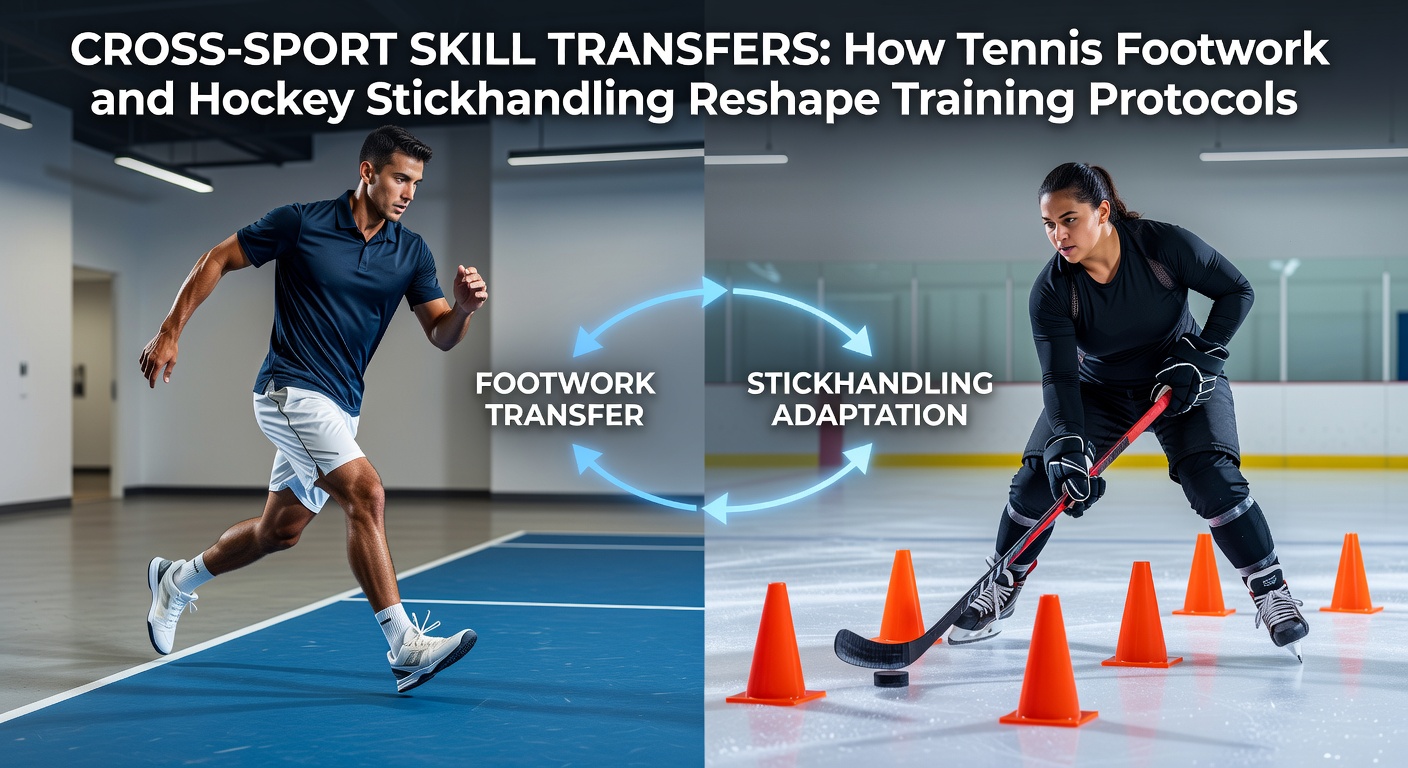
Combined Protocols Across Academies and Nets
Facilities that house both football and cricket programs have merged the two skill sets into unified weekly schedules. Players rotate through stations that alternate tennis footwork ladders with hockey puck manipulation before finishing with sport-specific ball work. This rotation structure emerged because isolated practice of each element produced smaller transfer effects than combined exposure, according to internal reports from academies operating in the United Kingdom and South Africa.
Monitoring equipment attached to players during these sessions captures heart-rate variability and ground-reaction forces, allowing strength and conditioning staff to adjust volume so that fatigue does not mask the intended skill gains. Academies that track these variables report fewer soft-tissue injuries during the adaptation phase compared with traditional linear sprint work alone.
Evidence from Performance Tracking Systems
Wearable sensor data collected across multiple academies indicates that athletes who follow the cross-sport protocols display shorter ground-contact times during acceleration phases. The same datasets reveal improved bat-swing efficiency in cricketers who practice hockey-derived wrist rolls. These objective markers have encouraged governing bodies in different regions to fund further longitudinal studies, and results presented at the 2025 International Conference on Sports Biomechanics highlighted consistent transfer effects across age groups from under-14 to under-19.
Coaches continue to refine drill selection because not every tennis or hockey exercise produces equal returns in football or cricket contexts. Iterative testing at academy level shows that shorter, high-intensity bursts of tennis recovery steps combined with low-volume hockey handling produce the strongest carryover without overloading developing joints.
Conclusion
Training programs that deliberately blend tennis footwork and hockey stickhandling with football and cricket practice have documented improvements in agility metrics and ball-control precision. Academies operating these protocols as of May 2026 rely on performance data rather than anecdotal reports to guide further adjustments. The approach continues to expand because sensor-based tracking provides clear evidence of transfer effects across the four sports involved.