27 Jul 2026
Elite Athlete Injury Recovery: Timelines Across Football, Cricket, and Tennis
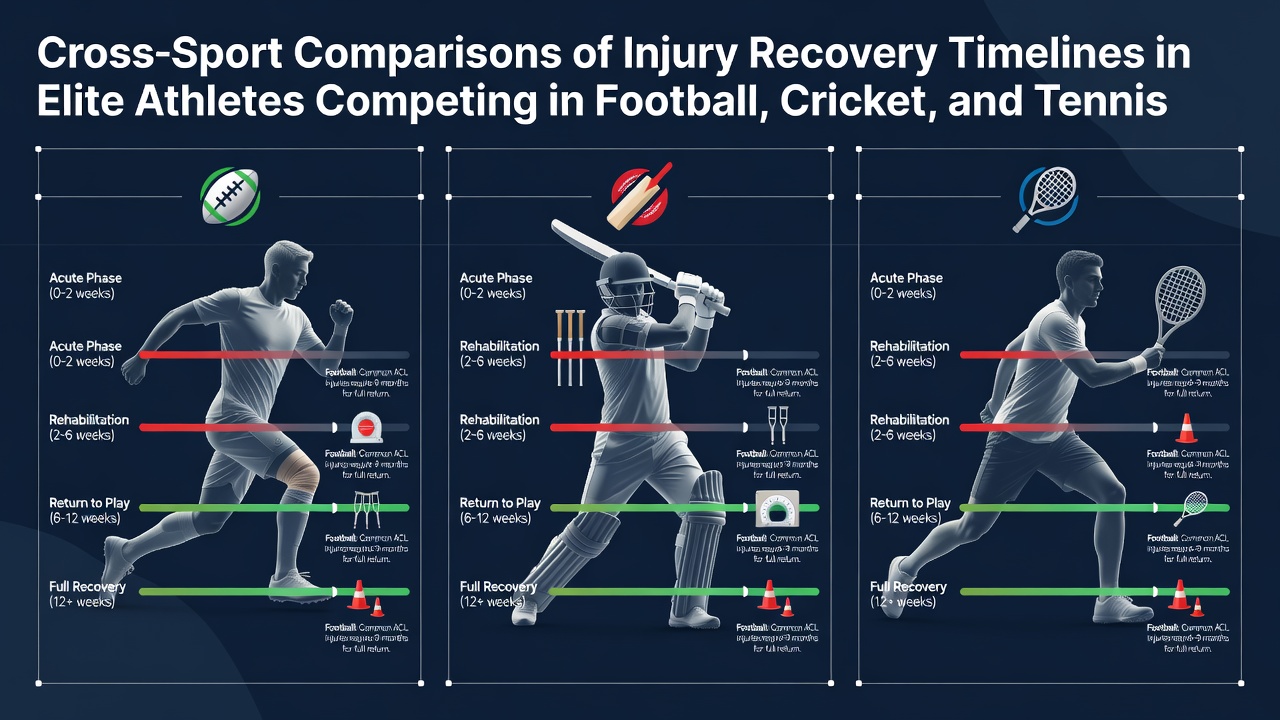
Recovery timelines for elite athletes vary significantly depending on the sport, the type of injury, and the demands placed on specific body parts, with researchers tracking these patterns through large-scale studies that span multiple seasons. Football players often face contact-related trauma such as anterior cruciate ligament tears, while cricket athletes deal more frequently with overuse conditions in the shoulders and lower back, and tennis competitors encounter repetitive strain issues in the elbows, wrists, and knees. Data collected from professional leagues shows that return-to-play protocols have become more standardized since 2020, yet differences persist across disciplines because each sport stresses distinct movement patterns and recovery variables.
Football Injury Patterns and Recovery Data
Football athletes experience high rates of knee and ankle injuries due to pivoting, tackling, and sudden directional changes, and studies from the UEFA Elite Club Injury Study indicate that ACL reconstruction typically requires nine to twelve months before full match fitness returns. Hamstring strains, which account for a large portion of time-loss injuries, often see players sidelined for three to eight weeks depending on severity grades, while ankle sprains can resolve in two to six weeks with structured rehabilitation. Medical teams monitor load management closely during the January transfer window and summer tournaments, and figures from the English Premier League reveal that teams implementing advanced monitoring systems reduced recurrent injuries by measurable margins between 2023 and 2025.
Cricket-Specific Recovery Timelines
Cricket bowlers face particular stress on the lumbar spine and shoulder from repetitive delivery actions, leading to stress fractures that demand four to six months of recovery according to research published in the Journal of Science and Medicine in Sport. Fast bowlers returning from shoulder rotator cuff repairs commonly require six to nine months before bowling at full intensity, whereas batsmen recovering from hand fractures or wrist tendon issues often return within six to ten weeks. The longer format of test matches allows for more gradual reintegration compared with the compressed schedules of T20 leagues, and data from Cricket Australia’s injury surveillance program shows that workload limits introduced in 2019 lowered incidence rates of lower-back stress injuries in subsequent seasons.
Tennis Recovery Considerations
Tennis players contend with elbow tendinopathy, wrist instability, and knee cartilage wear from the repetitive, high-impact nature of the sport, and data compiled by the International Tennis Federation indicates that lateral epicondylitis treatment typically allows return to competition in four to eight weeks when combined with targeted physical therapy. More severe cases such as meniscal tears or stress fractures in the foot require three to five months of structured rehabilitation before players resume full training loads. Grand Slam schedules place additional pressure on recovery windows, and medical staff note that players who sustain injuries during the clay-court swing in spring often benefit from extended off-season rest periods before the hard-court season resumes.
Comparative Analysis of Timelines
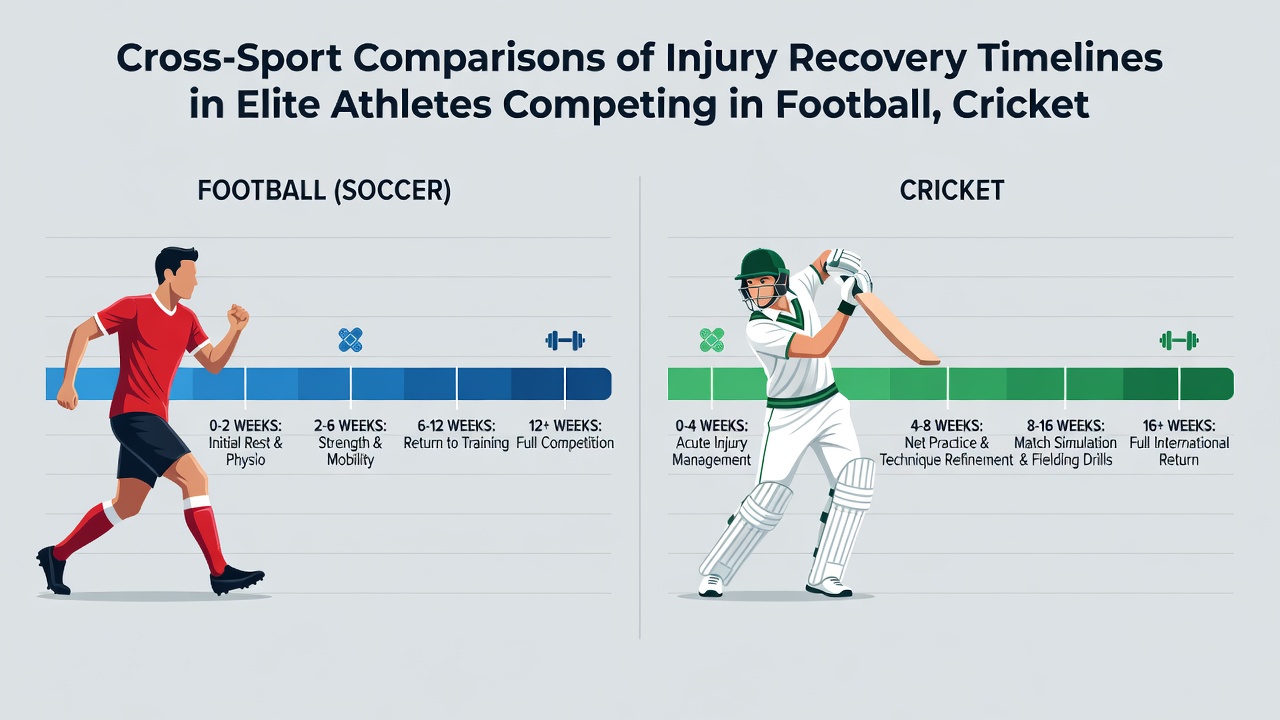
When researchers compare the three sports, football shows shorter average recovery for soft-tissue injuries yet longer timelines for major ligament reconstructions, whereas cricket and tennis demonstrate more consistent patterns for overuse conditions that respond well to early intervention. A 2024 multi-sport review conducted by Canadian Sport Institute Pacific found that athletes in non-contact sports such as tennis achieved full return-to-play benchmarks faster for similar injury grades than football players because of lower collision risk during rehabilitation. Cricket fast bowlers, however, required the longest monitored periods for spinal stress injuries due to the unique rotational forces involved in bowling actions. These patterns highlight how sport-specific biomechanics directly influence both injury type and healing duration.
Observers note that July 2026 tournament calendars have already prompted several national federations to adjust pre-season training blocks based on updated recovery statistics, with football clubs, cricket boards, and tennis associations sharing data on load thresholds and return-to-play criteria. Cross-sport collaboration has increased through conferences organized by bodies such as the International Olympic Committee, allowing medical teams to adapt protocols from one discipline to another when athletes transition between codes or face multiple injury types in a single career.
Conclusion
Recovery timelines in elite football, cricket, and tennis reflect the unique physical demands of each sport, with available data showing clear differences in both injury profiles and rehabilitation lengths. Continued surveillance by international sports medicine organizations supports refined protocols that help athletes return safely while minimizing re-injury risk across all three disciplines.