Endurance Patterns in Multi-Code Football and Racket Sport Tournament Timetables
Sam Zimmermann · Jun 5, 2026
Endurance Patterns in Multi-Code Football and Racket Sport Tournament Timetables
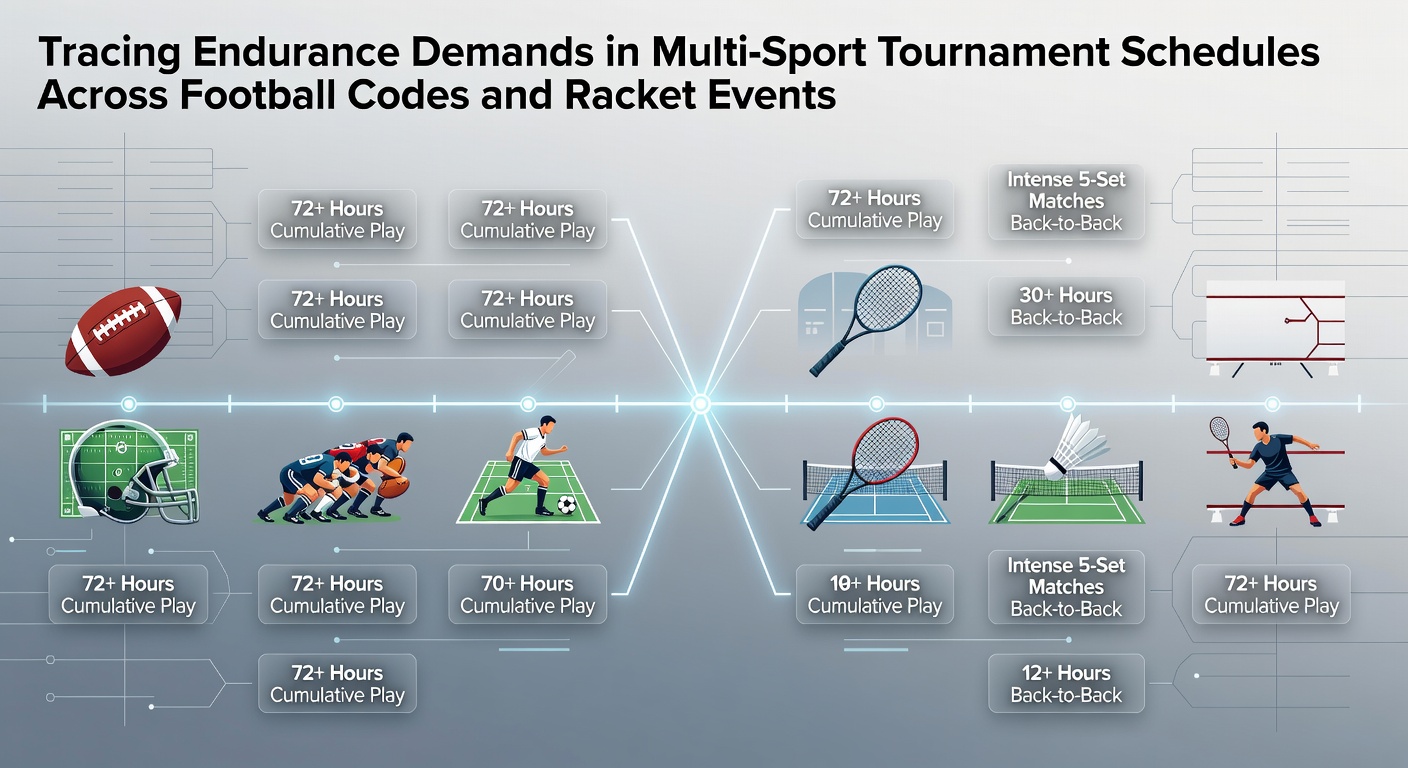
Multi-sport tournament schedules place distinct endurance requirements on athletes across football codes such as soccer, rugby union, rugby league, Australian rules football, and American football alongside racket events including tennis, badminton, and squash. Data from governing bodies shows that fixture congestion varies by sport, with recovery windows ranging from 48 hours in some tennis draws to several days between rugby matches during international windows. Researchers at institutions in Australia and North America have documented how cumulative workloads influence physiological markers like heart rate variability and muscle glycogen stores, while tournament organizers adjust calendars to balance commercial demands with athlete welfare.
Schedule Structures Across Football Codes
Football codes operate under calendars that differ in match duration and physical contact levels. Soccer leagues typically feature matches lasting 90 minutes plus stoppages, whereas rugby union contests extend to 80 minutes of continuous play with higher collision rates. Australian rules football games run for about 120 minutes including time-on, demanding sustained running volumes that exceed 12 kilometers per player in elite competitions. American football emphasizes short bursts of high-intensity effort separated by longer rest periods, yet the overall season length reaches 17 regular games plus playoffs. Observers note that these formats create unique endurance profiles, with data indicating higher aerobic demands in soccer and rugby league compared to the anaerobic focus in gridiron codes.
International tournaments add further layers. FIFA World Cup cycles and Rugby World Cup schedules compress multiple high-stakes matches into four to six weeks, requiring players to maintain output despite travel and limited recovery. Studies tracking elite squads reveal that teams advancing deep into knockout stages experience measurable declines in sprint performance metrics by the later rounds, prompting federations to explore extended preparation periods ahead of major events scheduled around June 2026.
Racket Sport Tournament Demands
Racket events impose repetitive loading patterns through extended match durations and rapid directional changes. Professional tennis players often compete in best-of-five-set matches that exceed three hours, with Grand Slam schedules packing five rounds into two weeks at major venues. Badminton and squash feature shorter individual points yet accumulate high match volumes during multi-day tournaments, where athletes may play multiple sessions daily. Performance data collected by international federations indicates elevated rates of lower-limb fatigue in these sports, particularly when surface changes occur between indoor and outdoor venues.
Combined events such as the Olympics or multi-sport festivals require athletes to navigate transitions between football codes and racket disciplines within tight windows. Organizers coordinate timetables to minimize overlap, yet athletes in mixed programs report challenges maintaining peak conditioning across varied movement patterns.
Recovery Windows and Workload Management
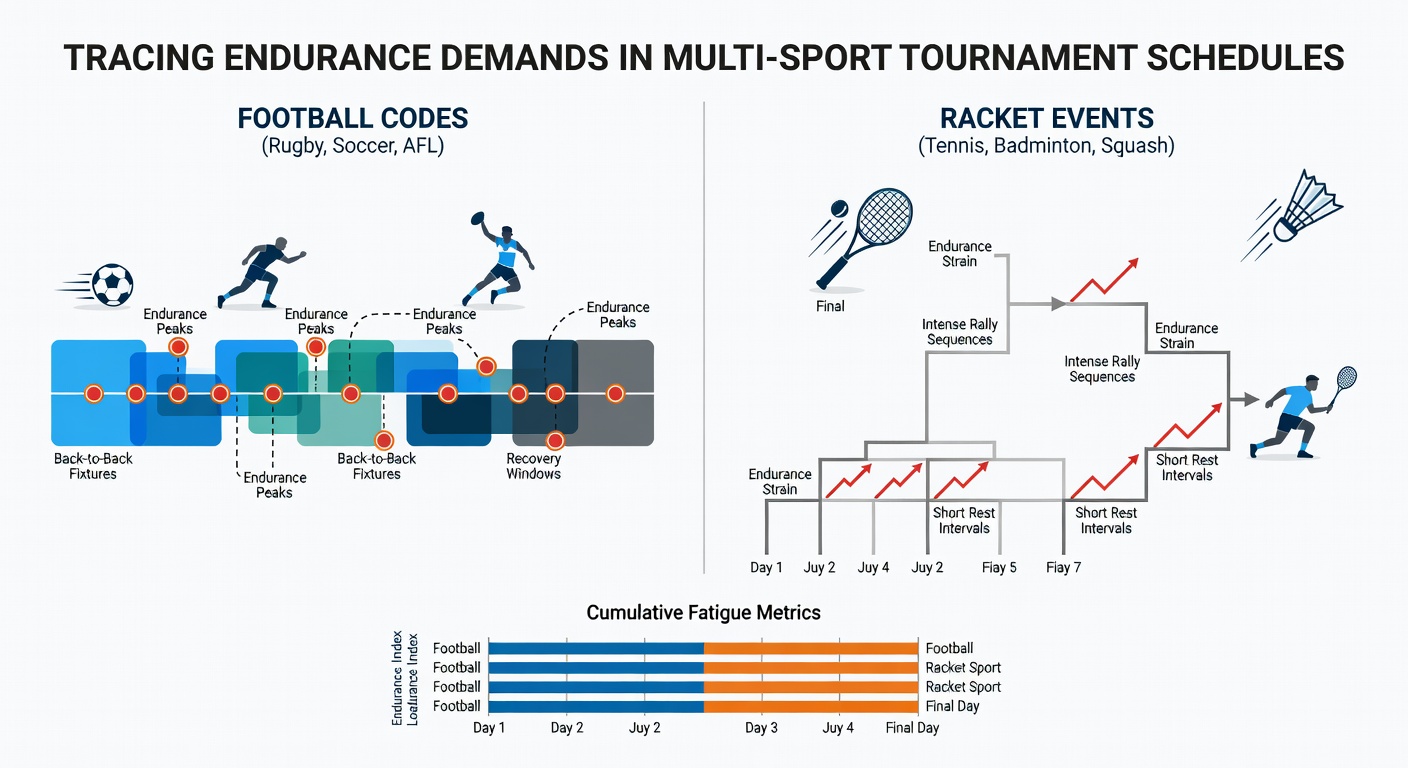
Recovery intervals between fixtures directly affect endurance sustainability. Research coordinated through the University of Queensland highlights that intervals under 72 hours correlate with increased injury incidence in collision sports, while racket athletes show performance decrements after consecutive days of competition exceeding four hours total. Leagues have introduced minimum rest rules, yet global travel across time zones compounds physiological stress beyond simple match counts.
Monitoring technologies now track external loads such as distance covered and accelerations alongside internal markers including perceived exertion scores. Teams integrate these datasets to adjust training loads during congested periods, with evidence from longitudinal studies showing reduced soft-tissue injury rates when individualized recovery protocols are applied. In June 2026, several federations plan to trial expanded rest mandates during overlapping international windows to test impacts on overall player availability.
Comparative Data and Emerging Patterns
Comparative analyses across codes reveal that endurance thresholds scale with match density rather than sport alone. A single Australian rules football season may require 22 home-and-away games plus finals, mirroring the 30-plus match tennis calendar at the elite level. Findings compiled by North American collegiate athletic associations indicate that American football programs mitigate cumulative fatigue through position-specific conditioning, whereas badminton circuits emphasize rapid turnaround training sessions between tournaments.
Environmental factors including heat, altitude, and playing surfaces further modulate demands. Data collected during events held in varying climates shows elevated core temperatures and dehydration risks that accelerate fatigue onset, prompting schedule adjustments such as evening kickoffs or extended hydration breaks.
Conclusion
Tracing endurance demands across these schedules underscores the interplay between fixture volume, sport-specific movement patterns, and recovery infrastructure. Organizations continue refining calendars based on aggregated performance and medical datasets, with ongoing trials ahead of 2026 events aimed at optimizing athlete output while preserving long-term welfare. Continued monitoring across football codes and racket disciplines provides the foundation for evidence-based timetable adjustments in future multi-sport competitions.