Formation Adjustments Reshaping Team Dynamics in Premier League and Serie A Seasons
Alex Berger · Jul 8, 2026
Formation Adjustments Reshaping Team Dynamics in Premier League and Serie A Seasons
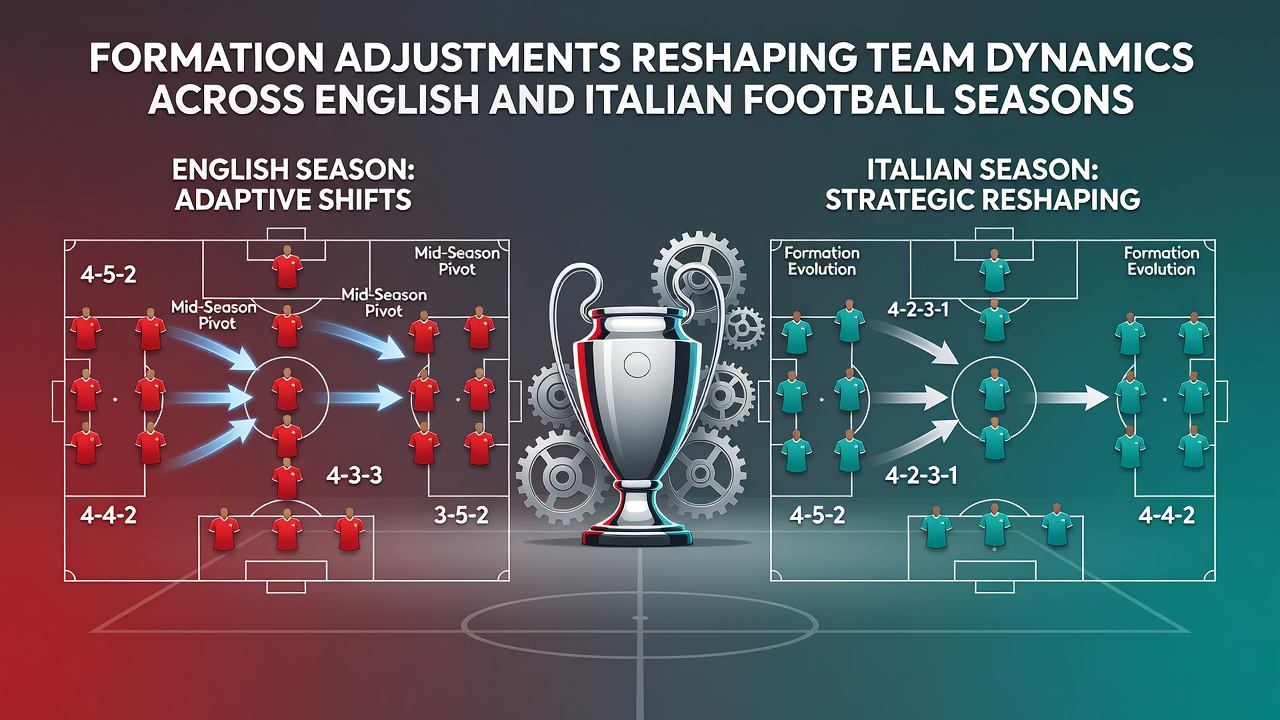
Coaches across the Premier League and Serie A have turned to formation tweaks as a way to influence player positioning and overall team flow during recent campaigns, and data from match analyses shows measurable shifts in how squads interact on the pitch. Teams that once relied on rigid 4-4-2 setups now experiment with flexible 3-5-2 or 4-2-3-1 arrangements, while July 2026 pre-season windows gave managers extra time to test these changes ahead of the new schedules.
Shifts Observed in English Top-Flight Matches
Premier League sides recorded an increase in games featuring three central defenders during the 2025-2026 season according to Opta tracking figures, and this adjustment altered how full-backs advanced into midfield zones. Liverpool and Manchester City both recorded higher pass completion rates in build-up phases after adopting such systems, while Arsenal maintained a 4-3-3 base that allowed wingers to drop deeper and create overloads on the flanks. Observers note that these choices influenced defensive lines as well, because teams using wing-backs often pushed their back three higher to compress space for opponents.
Statistics released by the Premier League's official data partner reveal that set-piece goals rose by 12 percent in matches where managers switched to a back-three shape mid-game, and this pattern appeared in several high-profile fixtures. Tottenham Hotspur adjusted their approach during January windows to incorporate more inverted full-backs, resulting in tighter central control that limited counter-attacks from visiting sides. Those adjustments carried through to away fixtures where space management became critical.
Changes Across Serie A Campaigns
Serie A clubs leaned into 3-4-2-1 and 4-1-4-1 variations during the same period, and clubs like Inter Milan and Napoli used these setups to balance defensive solidity with quick transitions. Figures from Lega Serie A indicate that teams employing double pivots in midfield completed more progressive passes per 90 minutes than in prior seasons, while Juventus maintained a flexible 4-2-3-1 that allowed attacking midfielders to rotate positions fluidly. Such rotations reduced predictability, forcing opponents to adjust marking schemes on the fly.
Coaches in Italy also focused on player-specific roles within new formations, and this approach produced measurable gains in possession retention during away games. AC Milan recorded improved recovery rates after shifting to a 3-5-2 in select matches, and the change helped midfielders track runners more effectively. Data from the Italian federation's technical department shows these tweaks contributed to fewer turnovers in the final third across the league average.
Comparative Patterns Between the Two Leagues
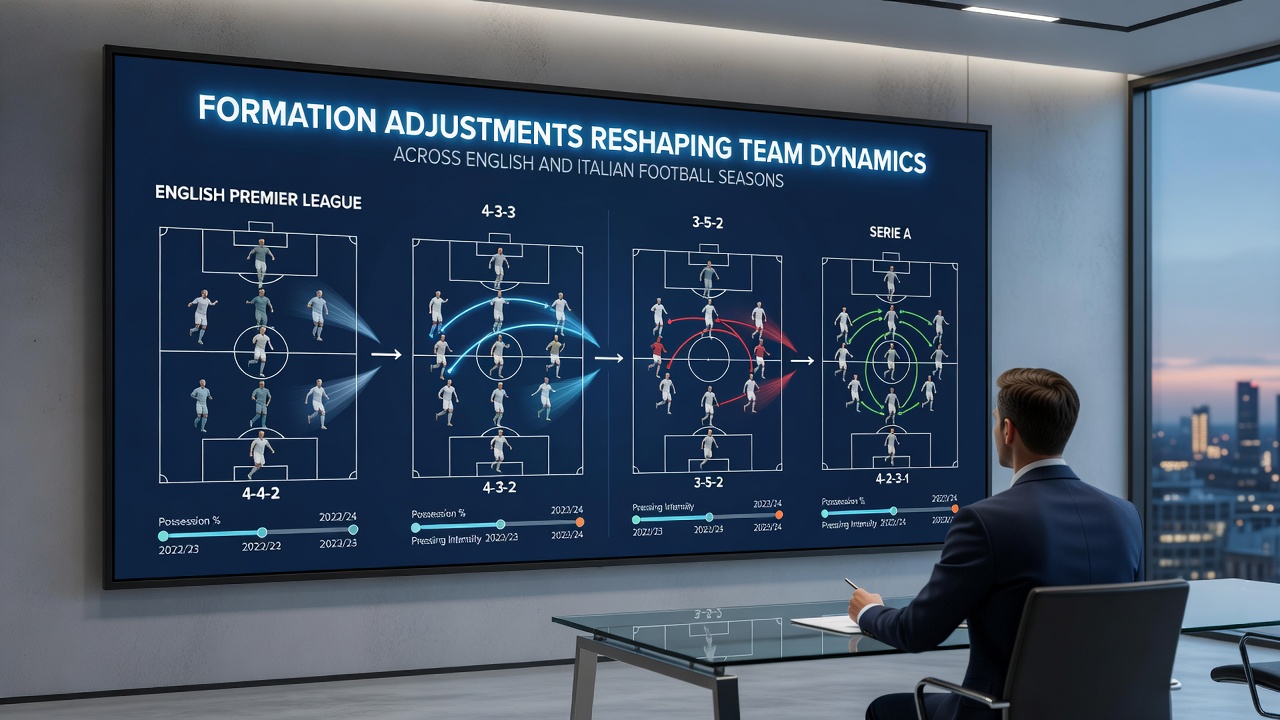
When analysts compared match data from both leagues, common threads emerged around the timing of formation switches, and many teams introduced changes at half-time rather than before kickoff. A UEFA technical report covering European competitions highlighted how English sides favored width in their adjustments whereas Italian clubs prioritized central compactness. This difference influenced how opponents prepared, because scouting reports needed to account for multiple potential lineups.
Training-ground drills reflected these league-specific preferences, and clubs in England spent more time on wide overload exercises while Serie A teams drilled compact pressing triggers. The result appeared in average distances covered by defenders, with English backlines logging higher sprint counts during transitions. Italian sides instead recorded elevated pass accuracy in tight spaces according to league-wide metrics.
Impact on Individual Player Roles and Squad Cohesion
Formation adjustments directly affected how players interpreted their responsibilities, and strikers in both leagues found themselves dropping deeper to link play more often. Midfielders gained new instructions to cover wider areas when wing-backs pushed forward, and this redistribution changed fatigue patterns across 90 minutes. Goalkeepers also adapted distribution styles to suit the new backline shapes, favoring shorter passes when three defenders started builds from the rear.
Teams that integrated these changes early in July 2026 pre-season windows showed faster cohesion once the competitive calendar resumed, and medical staff reported fewer soft-tissue issues linked to positional familiarity. The adjustments also created opportunities for squad rotation, because versatile players could slot into multiple roles without disrupting the overall structure.
Conclusion
Formation adjustments continue to influence how teams organize across the Premier League and Serie A, and ongoing data collection from governing bodies will track further developments in coming windows. Clubs that refine these systems during off-season periods gain measurable edges in both possession metrics and defensive organization, while players adapt to evolving role requirements that reshape daily training demands. The patterns observed through 2026 suggest these tactical choices will remain central to competitive preparation in both leagues.