7 Aug 2026
Home Ground Advantages: Examining Patterns in AFC Competitions and Hockey Domestic Seasons
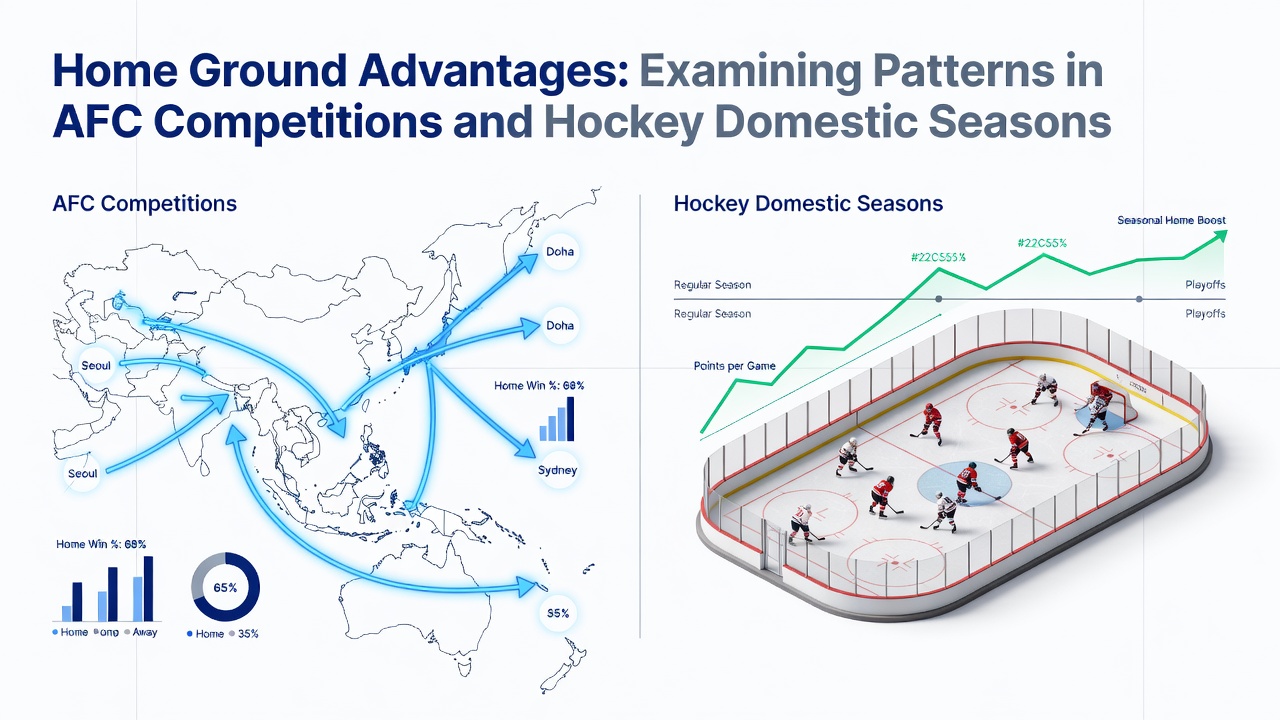
Patterns of home ground advantage continue to shape outcomes across AFC football competitions and various domestic hockey leagues, with data from recent seasons revealing consistent edges for teams playing on familiar turf. Analysts track these trends through metrics such as win rates, goal differentials, and attendance figures, while August 2026 schedules already list opening fixtures in both the AFC Champions League Elite and several national hockey championships where such advantages may again influence results.
Tracking AFC Football Trends
Competitions organized by the Asian Football Confederation show home sides securing victories in roughly 45 to 52 percent of matches over the past five campaigns, according to compiled league records, and this margin widens during group stages when travel distances stretch across time zones. Teams based in high-altitude venues or humid climates often record stronger defensive numbers at home, whereas visiting sides struggle with adaptation despite identical squad rotations. One study released by the Asian Football Confederation in 2024 documented how pitch dimensions and surface conditions at certain stadiums correlate with fewer away goals, while crowd density appears to affect referee decisions on set pieces.
Yet the advantage does not remain static. Data collected from knockout ties indicates that away teams improve their performance in the second leg when they secure a narrow deficit after the first match at home, suggesting tactical adjustments play a larger role than venue alone. Observers note similar patterns in the AFC Cup, where lower-ranked clubs from Southeast Asia post higher home win percentages than their West Asian counterparts, a difference researchers link to regional variations in training facilities and recovery protocols.
Domestic Hockey Seasons and Venue Effects
Field hockey leagues in Europe and Asia display parallel trends, although the scale differs because of smaller crowds and shorter seasons. In the Netherlands Hoofdklasse and India's Hockey India League, home teams convert approximately 48 percent of matches into wins, with penalty corner conversion rates rising notably when played before local supporters. Australian domestic competitions report comparable figures, and a 2025 report from the Australian Institute of Sport highlighted how synthetic pitch wear patterns at established venues give home sides better ball control in the final quarter.
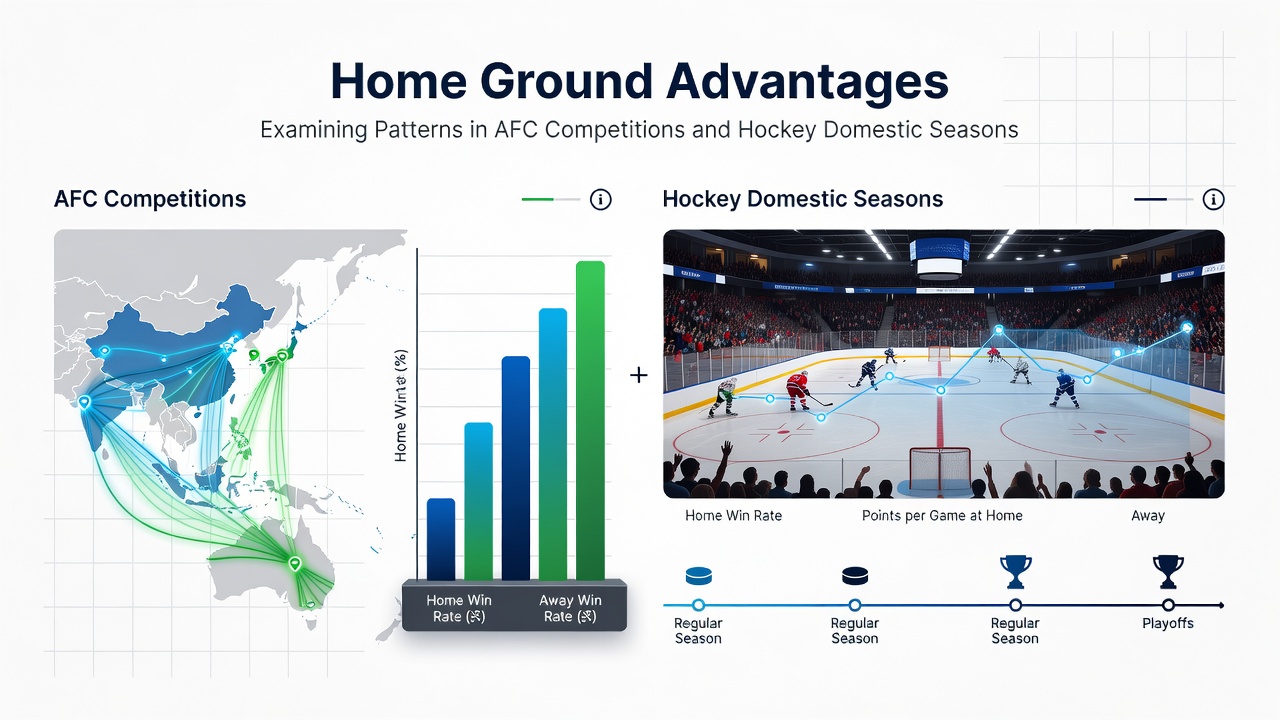
Travel fatigue emerges as another measurable factor. Clubs crossing multiple time zones for away fixtures in the Euro Hockey League or the Asian Champions Trophy record lower possession statistics, while teams returning to their own grounds after long trips post improved recovery times and fewer injuries. Those who've examined fixture lists for August 2026 note that several early-season hockey derbies fall on consecutive weekends, potentially amplifying home advantages when squads have limited rest between games.
Comparative Data Across Sports
Cross-sport comparisons reveal that football matches under AFC jurisdiction generate larger home margins than hockey fixtures, partly because of higher scoring volumes and the impact of crowd noise on officiating calls. Hockey, by contrast, shows advantages concentrated in specific technical areas such as circle entries and defensive clearances. Figures from the International Hockey Federation indicate that home sides in national leagues win 12 percent more penalty corners on average, a statistic that holds steady across multiple continents.
Environmental elements also contribute. High temperatures in Middle Eastern football venues and variable weather in European hockey grounds affect both teams, yet the side accustomed to local conditions adapts faster. Researchers at the University of Queensland published findings in 2023 that linked humidity levels above 70 percent to a measurable drop in away-team sprint distances during AFC matches, while similar climate data from Canadian hockey associations shows reduced stamina for visiting players during summer tournaments.
Conclusion
Records from AFC competitions and domestic hockey seasons demonstrate that home ground advantages remain a measurable influence shaped by venue familiarity, travel demands, and environmental conditions. Continued collection of performance statistics through the 2026 season will allow further examination of these patterns across both sports.