Mapping Squad Dynamics and Recovery Protocols Across Transcontinental Club and Bilateral Encounters
Sam Zimmermann · Jun 12, 2026
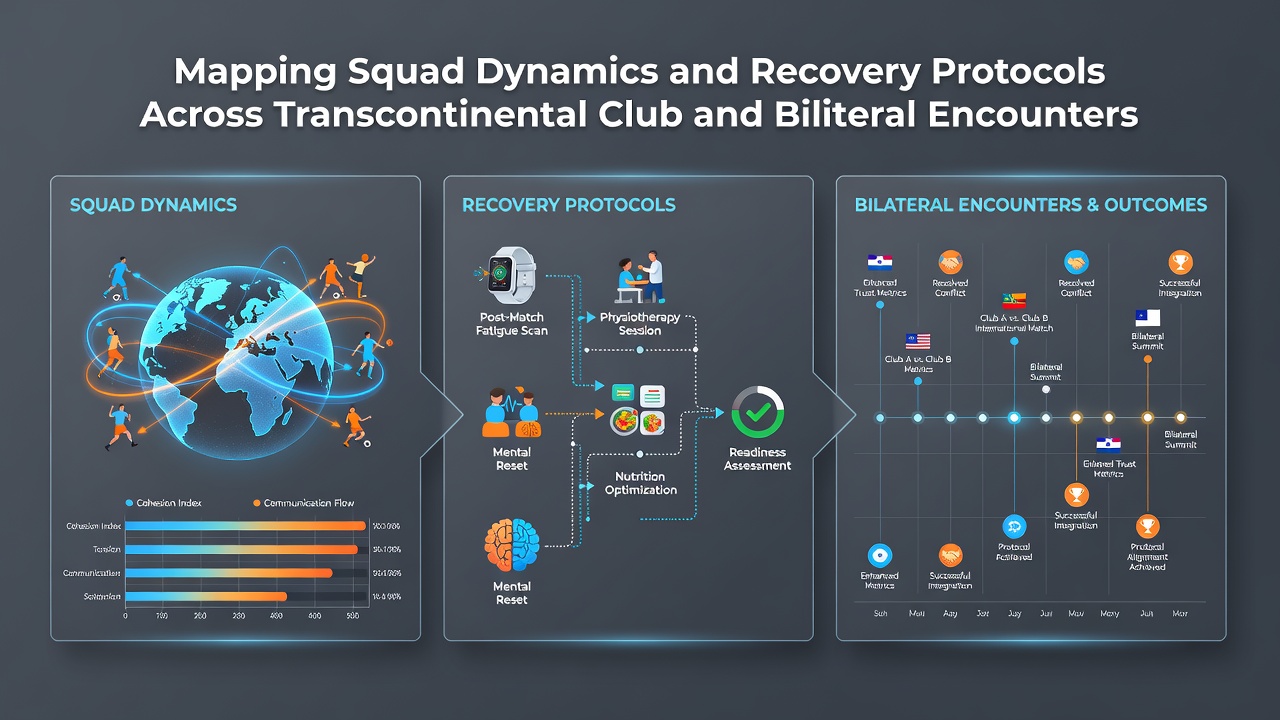
Mapping Squad Dynamics and Recovery Protocols Across Transcontinental Club and Bilateral Encounters
Club managers and national team coaches face increasing demands when squads travel between continents for competitive fixtures, and this pattern intensifies ahead of major tournaments scheduled for June 2026. Squad dynamics involve player selection, role distribution, and interpersonal chemistry while recovery protocols address sleep adjustment, muscle repair, and training load after extended flights. Observers note that these elements intersect most clearly in transcontinental club campaigns and bilateral international matches, where data from performance tracking systems guides decisions.
Understanding Squad Dynamics in Extended Travel Scenarios
Teams crossing multiple time zones must balance established lineups with opportunities for rotation, and researchers at institutions such as the Australian Institute of Sport have examined how cohesion develops under these conditions. Data indicates that groups traveling from Europe to Australia or South America often require three to five days before match intensity returns to baseline levels. Coaches map dynamics by monitoring passing networks and pressing triggers through wearable technology, allowing adjustments that maintain tactical identity despite fatigue.
Bilateral encounters add another layer because national squads assemble for shorter windows than clubs, yet the travel distances can exceed those in domestic leagues. Figures from recent confederation qualifiers reveal that teams from Asia and Africa competing in Europe report higher rates of soft-tissue issues when recovery windows shrink below seventy-two hours. Analysts therefore track individual responses to jet lag through heart-rate variability and subjective wellness scores before finalizing starting groups.
Recovery Protocols Applied to Club and International Contexts
Modern protocols combine light training, nutrition timing, and sleep hygiene to accelerate adaptation, and evidence from longitudinal studies shows measurable gains when these elements are coordinated. Clubs with academies in multiple continents, for instance, often implement individualized plans that include melatonin scheduling and exposure to natural light at destination airports. National federations apply similar frameworks during away qualifiers, though resources vary by region and federation size.
One study revealed that structured recovery reduced perceived soreness by twenty-two percent among players who crossed six time zones, while another project documented faster return of sprint speed when cold-water immersion followed immediately after arrival. These findings influence how medical staff allocate resources across both club and bilateral schedules, particularly when fixtures cluster in short periods.
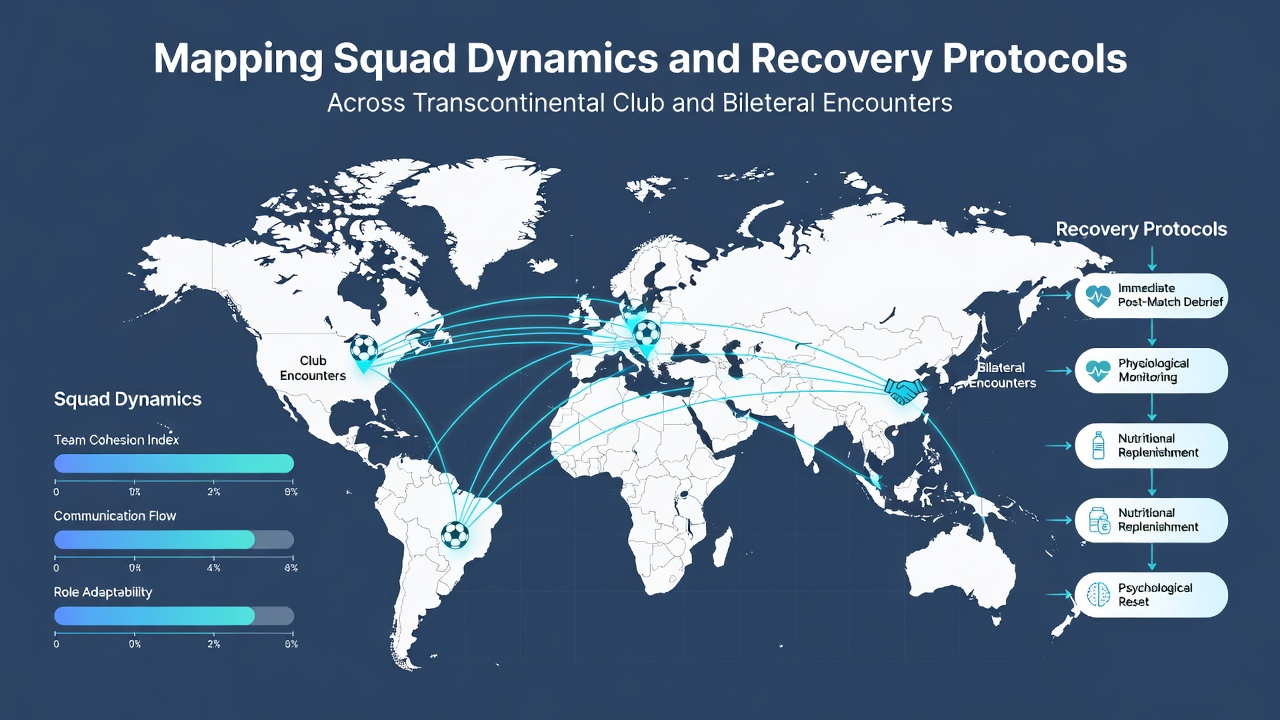
Integration of Technology and Data in Decision-Making
Performance analysts now integrate GPS, gyroscopic, and sleep-tracking data to create visual maps of squad readiness, and this approach helps identify which players recover fastest after long-haul journeys. European clubs participating in pre-season tournaments in Asia have used such dashboards to decide between full rest days and light activation sessions. Bilateral matches between CONMEBOL and UEFA sides demonstrate parallel patterns, where national federations share anonymized datasets to refine collective strategies.
What's interesting is that the same tools also highlight social dynamics, such as how leadership groups maintain communication standards during disrupted routines. Teams that preserve established hierarchies during travel tend to show steadier on-field coordination once matches begin, according to internal reports circulated among coaching staffs.
Case Examples from Recent Seasons
Take one European club that reached the final stages of an intercontinental competition after traveling from South America back to Europe within ten days. Staff adjusted recovery blocks by shortening high-intensity drills and increasing emphasis on mobility work, resulting in maintained defensive structure throughout the return leg. Observers documented similar adjustments during a series of bilateral friendlies involving an Asian national team touring South America, where daily wellness questionnaires guided minute-by-minute training modifications.
These examples illustrate how protocols scale across different competitive levels while remaining anchored in measurable outputs rather than assumptions about individual resilience.
Looking Ahead to June 2026 Preparations
With the expanded tournament format approaching, confederations have begun publishing preliminary guidelines on minimum rest periods between continental qualifiers and the opening matches. Data compiled by sports science departments across multiple federations suggests that squads arriving from distant time zones benefit from extended acclimatization camps, and several federations have already reserved training bases accordingly. The ball remains in the court of each association to translate these recommendations into concrete schedules.
Conclusion
Mapping squad dynamics alongside recovery protocols provides a practical framework for managing the realities of global football calendars. Evidence gathered from club campaigns and bilateral fixtures continues to refine best practices, while technology offers clearer visibility into both physical and tactical readiness. As June 2026 approaches, the integration of these elements will likely determine how effectively teams navigate the demands of transcontinental movement and compressed preparation windows.