Midfield Rotations: Analyzing Their Influence on League Competitions and Bilateral International Fixtures
Sam Zimmermann · Jul 6, 2026
Midfield Rotations: Analyzing Their Influence on League Competitions and Bilateral International Fixtures
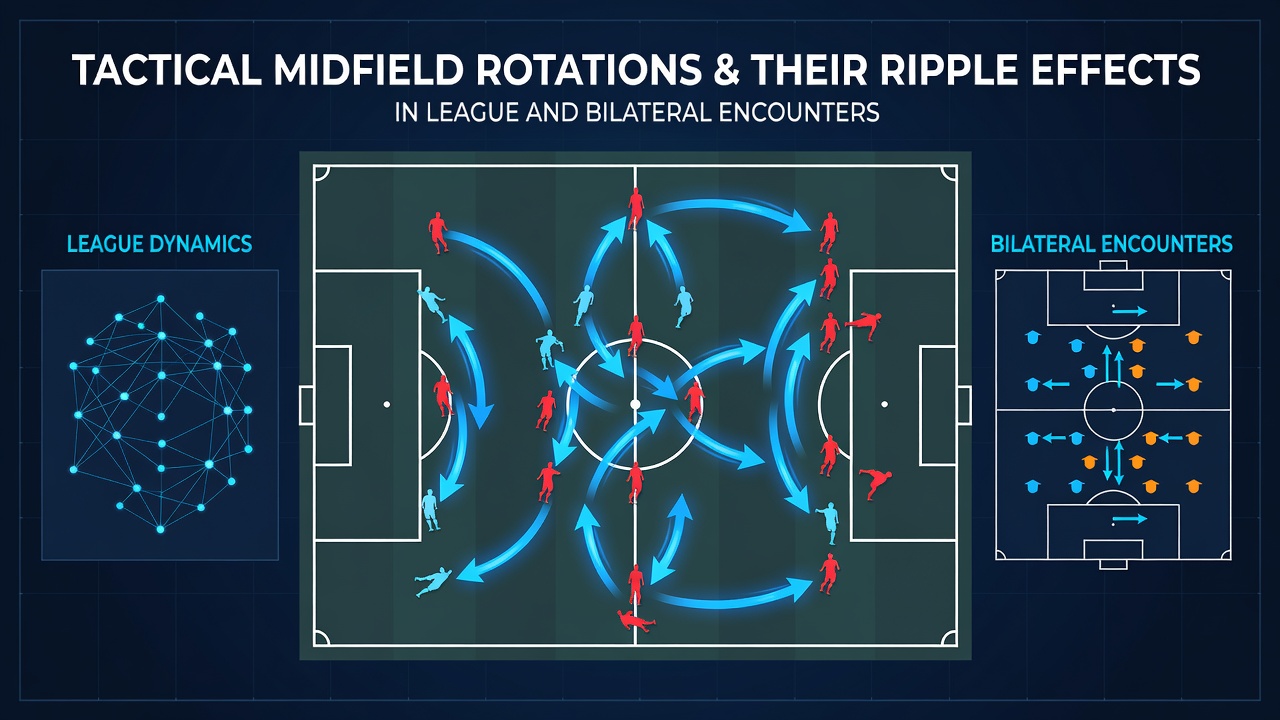
Coaches have long deployed midfield rotations to disrupt opponent structures, create passing lanes, and maintain possession under pressure, and these movements generate measurable changes in both domestic league fixtures and bilateral international contests. Teams execute rotations through positional interchanges among central midfielders, holding players, and attacking midfielders, which forces opponents to adjust defensive lines and marking assignments while altering space distribution across the pitch.
Core Mechanics Behind Midfield Rotations
Players initiate rotations by shifting laterally or vertically during build-up phases, often triggered by fullback overlaps or forward runs that pull markers out of position. Data from tracking systems shows that successful rotations increase pass completion rates in the middle third by creating temporary numerical superiorities, and observers note these patterns appear consistently across top European leagues where possession-oriented sides integrate them into daily training drills. The timing matters because early rotations in the first half establish control patterns that opponents must counter repeatedly, whereas late-game rotations exploit fatigue in defensive units that have already committed to specific shapes.
Effects Observed in Domestic League Play
League encounters amplify the consequences of midfield rotations because repeated fixtures allow opponents to study and adapt to recurring patterns over multiple rounds. One study from a Canadian sports research institute tracked how rotation frequency correlates with expected goal differentials, revealing that squads rotating midfielders at least eight times per match generate higher chance creation in transition phases. Teams in the Bundesliga demonstrate this through inverted fullback systems that pair with central rotations, whereas Serie A sides favor more compact structures that rotate only during set-piece transitions to maintain defensive integrity. These adjustments produce ripple effects on standings because points accumulated through rotation-driven control accumulate across a 38-match campaign, influencing qualification for continental competitions.
Coaches adjust rotation triggers based on opponent tendencies, and figures from league-wide analytics platforms indicate that sides facing high-pressing teams increase rotation tempo to bypass first-line pressure. This creates secondary effects on fullback positioning and winger involvement, which in turn affects crossing volume and set-piece opportunities later in matches.
Adaptations in Bilateral International Encounters
Bilateral series between national teams introduce different constraints because squads assemble for shorter windows and must integrate players from varied club systems. Rotations here serve to test combinations ahead of larger tournaments, and evidence from recent cycles shows national coaches using these fixtures to evaluate how players handle unfamiliar spacing when opponents lack extensive scouting data. In July 2026, several federations scheduled bilateral friendlies as final preparation steps before the expanded World Cup, allowing coaches to refine rotation triggers under match conditions without the intensity of group-stage consequences.
National teams from South American and Asian confederations often employ rotations differently than European sides because they blend players accustomed to varying tactical cultures. Bilateral encounters therefore highlight how quick positional switches can compensate for limited training time, and data collected by FIFA technical reports documents higher successful rotation rates when teams share a common language or prior club connections among midfield personnel.
Measurable Ripple Effects Across Both Formats
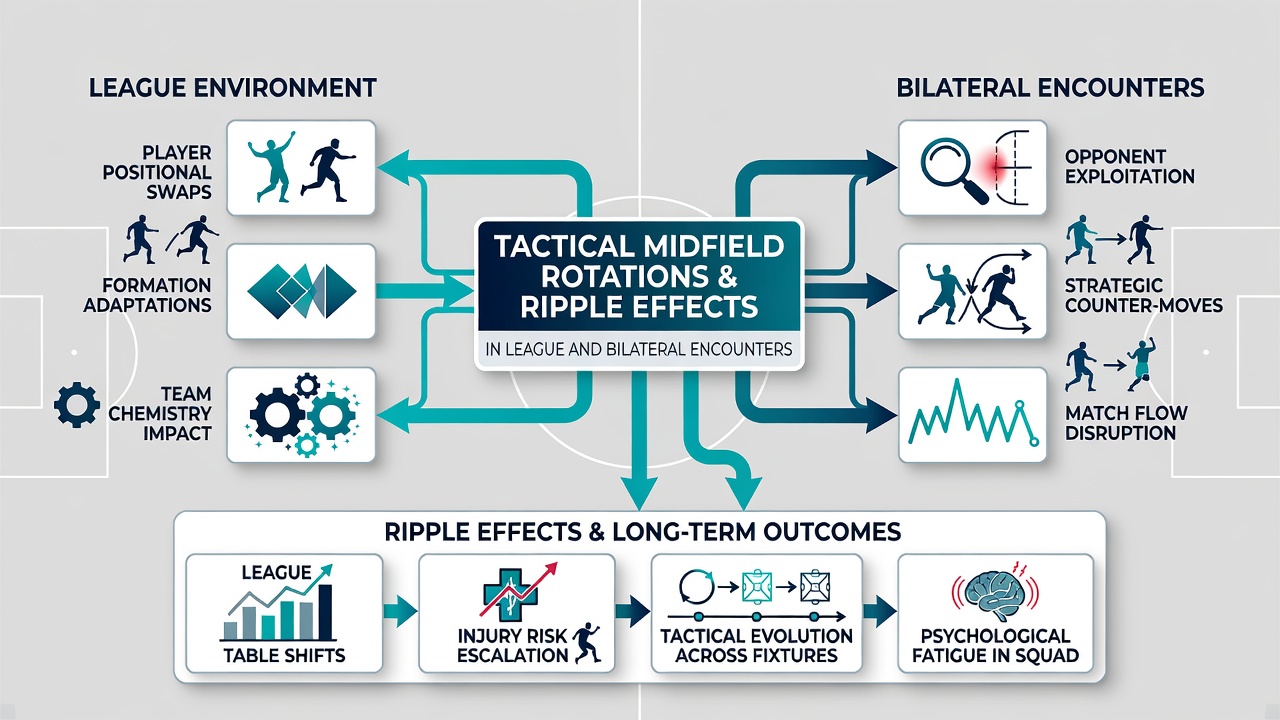
Rotations influence secondary statistics including distance covered by midfielders, pressing intensity, and recovery time after turnovers. Research published through an Australian Institute of Sport analysis links frequent rotations to reduced injury rates in high-workload positions because players share physical demands more evenly across the 90 minutes. In league contexts these effects compound over a season, whereas bilateral matches reveal immediate adaptations that carry forward into subsequent fixtures. Opponents respond by altering their own pressing triggers or dropping deeper to limit space behind the midfield line, which then affects overall match tempo and spectator engagement patterns observed across broadcast metrics.
Teams that master rotation timing often sustain longer possession sequences, and this control translates into fewer high-quality chances conceded because defensive structures remain compact during transitions. League tables reflect these advantages through goal difference margins, while bilateral results influence FIFA rankings that determine seeding for future events.
Conclusion
Midfield rotations function as a foundational tactical tool whose effects extend beyond single matches into season-long league dynamics and short-cycle international preparations. Tracking data and performance analysis continue to quantify how these movements reshape space, chance creation, and physical load distribution, providing coaches with objective criteria for selection and in-game adjustments across both domestic and bilateral environments.