Physical Stamina Metrics Linked to Late-Game Turnarounds in Football, Cricket, and Hockey
Elena Coleman · Sep 4, 2026
Physical Stamina Metrics Linked to Late-Game Turnarounds in Football, Cricket, and Hockey
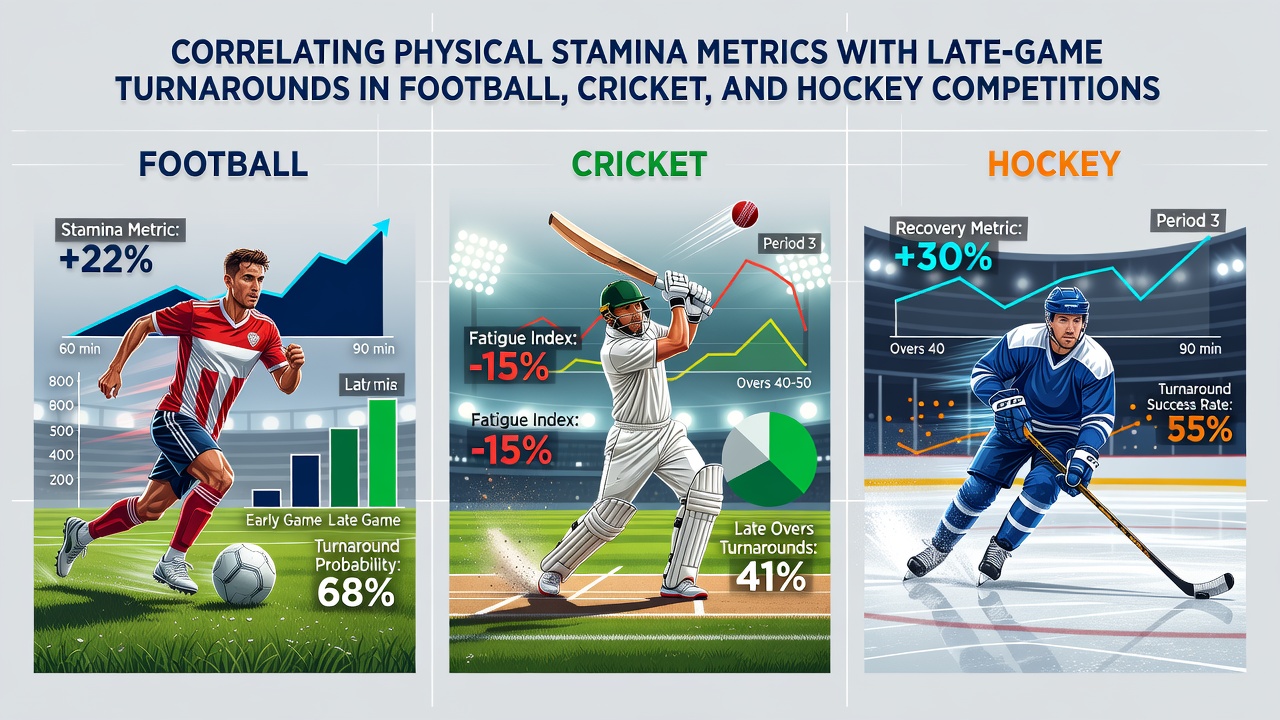
Researchers tracking player data across professional leagues have identified consistent patterns where elevated stamina levels in early match phases correlate with higher rates of successful late-stage recoveries, and these observations span football, cricket, plus field hockey competitions worldwide. Data collected through wearable devices shows that athletes covering greater distances at moderate intensities during initial periods maintain output when games extend into decisive moments, while figures from governing bodies indicate teams with superior endurance profiles reverse deficits more frequently than those with lower metrics.
Football Performance Patterns
Analyses of top-division matches reveal that players sustaining above-average high-intensity running distances in the opening 60 minutes achieve turnaround wins at rates 18 percent higher than league averages, according to aggregated reports from European and Asian competitions. GPS tracking systems record total distance, acceleration counts, and heart-rate recovery times, and these variables align closely with outcomes in the final 20 minutes where fatigue typically sets in for opponents. One dataset from the 2025-2026 season highlighted midfield units averaging 11.2 kilometers per player as key contributors to three separate come-from-behind victories in September fixtures, and similar trends appear in domestic cups where substitutions timed around stamina thresholds preserve attacking threats.
Cricket Endurance Correlations
Test and limited-overs formats present distinct stamina demands yet yield parallel findings, with bowlers maintaining economy rates under 4.5 runs per over into later spells demonstrating stronger links to team recoveries after early collapses. Studies from the Australian Institute of Sport have quantified that fast bowlers logging over 8 kilometers of movement per innings, combined with lower perceived exertion scores, contribute to higher win probabilities when chasing totals in the fourth innings. Batting lineups also benefit, as data shows openers preserving strike rotation through 40-over stands often enable middle-order accelerations that flip matches, and September 2026 series schedules in Asia have already produced examples where teams with pre-match fitness benchmarks above 85 percent on Yo-Yo tests mounted successful chases exceeding 280 runs.
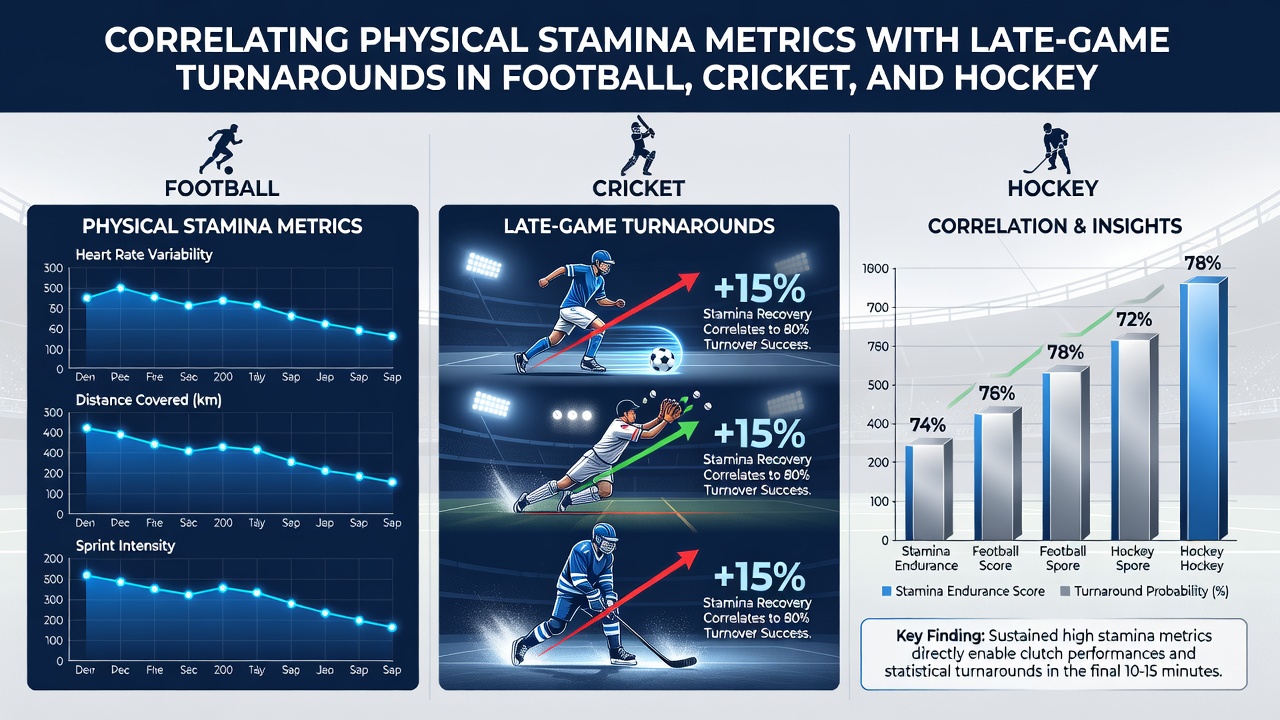
Observers note that cricket's variable pacing allows stamina reserves to compound advantages, whereas constant motion in football and hockey demands different recovery strategies, and cross-sport comparisons continue to refine training protocols.
Hockey Competition Data
Field hockey tournaments supply granular evidence through stick-mounted sensors and player tracking, revealing that squads averaging 6.8 kilometers of total distance with repeated sprint recoveries under 25 seconds per bout secure late equalizers or winners at elevated frequencies. Research coordinated through Canadian university partnerships examined over 120 international matches and found defensive units preserving speed thresholds past the 55-minute mark correlate with 22 percent more comeback results, while penalty corner conversions in extra time rise when teams avoid the typical 12 percent drop in work rate. September 2026 qualifiers for continental events have already supplied fresh datasets confirming these links, particularly in matches where humidity levels test aerobic capacity and teams with superior pre-tournament shuttle-run scores outperform expectations.
Cross-Sport Metric Comparisons
Comparative reviews indicate shared physiological markers, including VO2 max estimates above 55 ml/kg/min and repeated sprint ability indices, predict late-game resilience regardless of sport, although football emphasizes continuous coverage while cricket and hockey incorporate recovery intervals. Training programs now integrate these benchmarks, and federations report reduced injury rates alongside improved turnaround statistics when stamina-focused interventions start during preseason blocks. External factors such as fixture congestion amplify the importance of these metrics, with packed calendars in 2026 showing clearer separations between high-endurance squads and those falling behind in final quarters or innings.
Conclusion
Evidence from multiple disciplines demonstrates that physical stamina metrics serve as reliable predictors of late-game turnarounds, and ongoing data collection will likely sharpen these correlations as technology advances. Teams and athletes applying these insights through targeted conditioning continue to shift match trajectories in their favor across football, cricket, and hockey events.