Strategic Parallels Between Soccer Midfield Mastery and Test Cricket Bowling Pressure
Sam Zimmermann · Jun 24, 2026
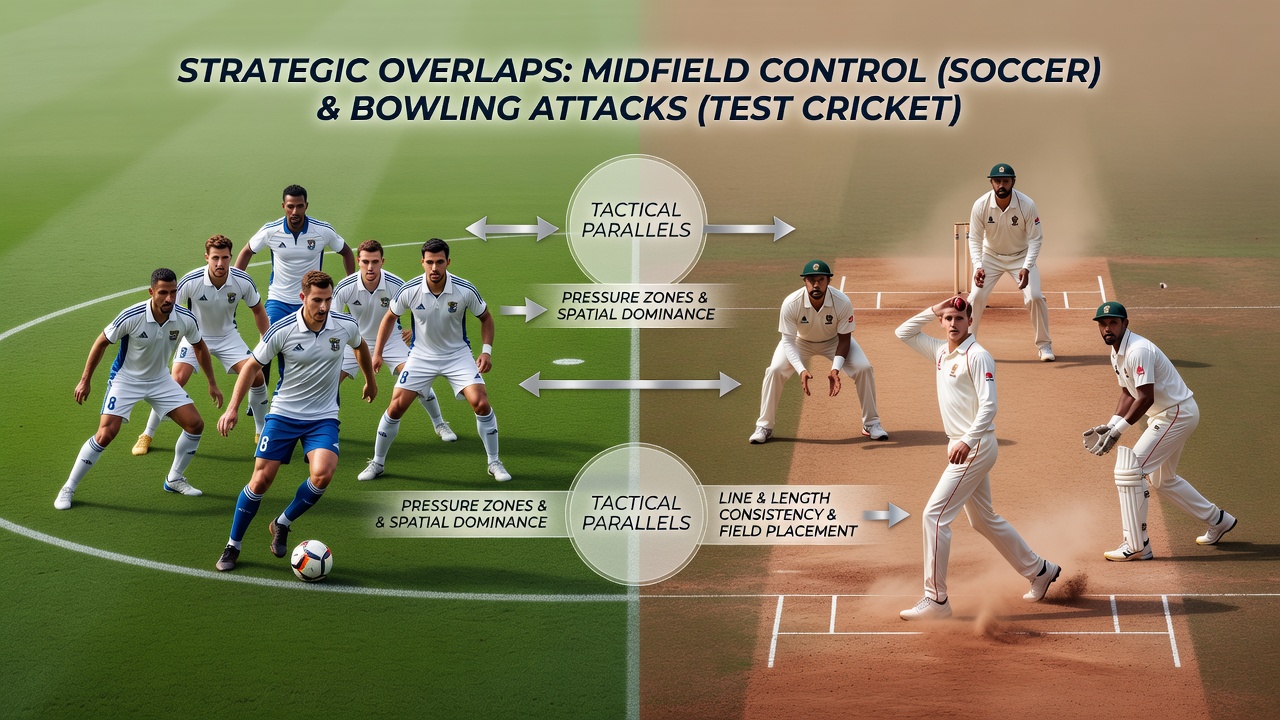
Strategic Parallels Between Soccer Midfield Mastery and Test Cricket Bowling Pressure
Analysts across multiple sports have long tracked how control of key zones dictates match outcomes, and the overlaps between soccer midfield dynamics and Test cricket bowling sequences stand out as particularly instructive. Data from recent international fixtures shows teams that dominate central areas in soccer often mirror the pressure-building tactics bowlers apply over extended spells in cricket, with both relying on coordinated positioning, tempo regulation, and exploitation of opponent weaknesses.
Core Elements of Midfield Control in Soccer
Soccer teams structure their midfield units to manage space, maintain possession percentages above 55 percent in many successful campaigns, and transition quickly between defense and attack. Players positioned in central zones coordinate pressing triggers that disrupt opponent build-up, while maintaining passing lanes that allow sustained control. According to figures released by UEFA technical reports, sides achieving higher pass completion rates in the middle third convert those advantages into more scoring opportunities over 90-minute contests.
Coaches deploy varying formations such as the 4-3-3 or 4-2-3-1 to balance defensive screening with forward distribution, and these setups adapt based on opponent pressing intensity. Researchers studying European league data note that midfield trios often rotate responsibilities, with one player dropping deeper to receive the ball while others occupy half-spaces to stretch defensive lines. This layered approach creates numerical superiorities that force opponents into predictable patterns.
Bowling Attacks in Test Cricket: Structure and Sequencing
Test cricket bowling units operate across extended periods, often exceeding 80 overs per innings, where bowlers alternate pace, seam movement, and spin to create cumulative pressure. Captains arrange fields that restrict scoring options while targeting specific batsman vulnerabilities, much like midfield blocks limit central channels in soccer. International Cricket Council match statistics indicate that teams maintaining consistent line-and-length accuracy for consecutive overs reduce batting strike rates by measurable margins across sessions.
Bowling attacks incorporate variations such as short-pitched deliveries, slower balls, and flighted spin to unsettle timing, and these adjustments occur in response to pitch conditions and batsman tendencies. Observers tracking series data find that opening bowlers frequently set the tone with tight lengths, allowing subsequent bowlers to exploit any resulting hesitancy in footwork or shot selection.
Shared Tactical Mechanisms Across Both Disciplines
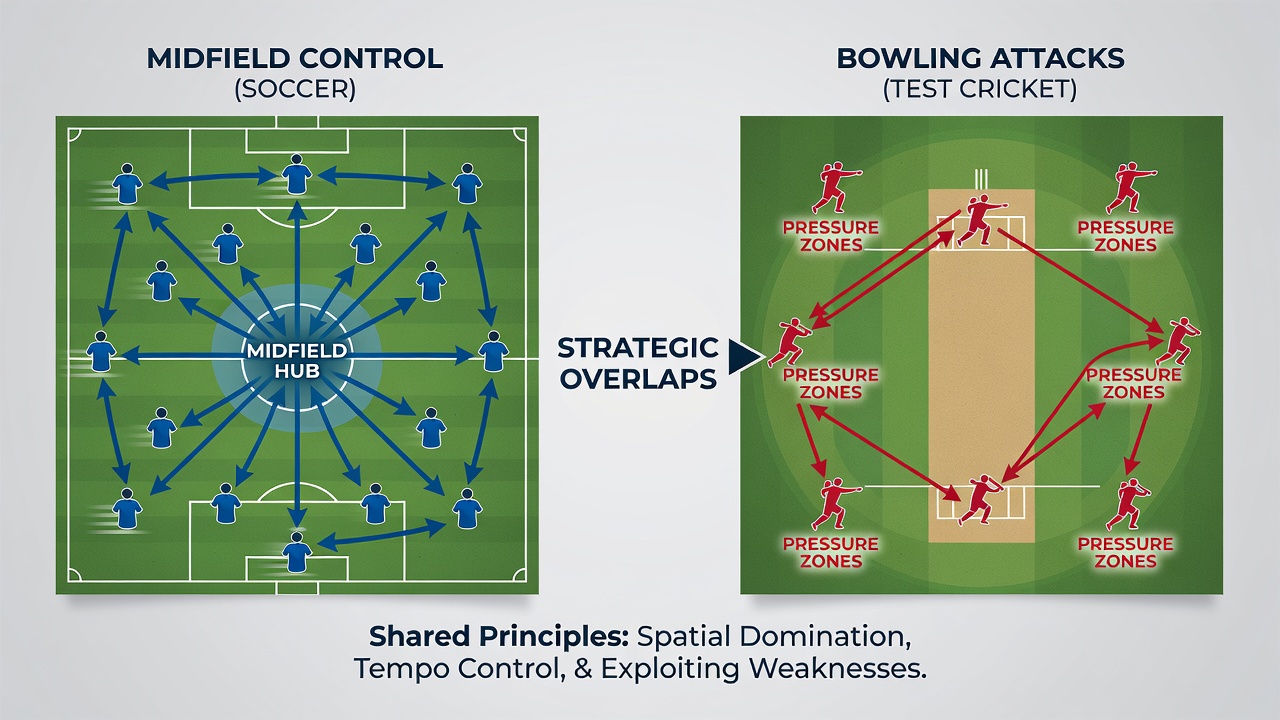
Both domains emphasize progressive pressure accumulation rather than isolated moments of brilliance. In soccer, midfield presses begin with triggers that force turnovers in defined zones, leading to quick transitions. In Test cricket, bowlers build through repeated accurate deliveries that gradually narrow batting options until an error emerges. Studies compiled by sports science departments at universities in Australia reveal similar decision-making timelines, with athletes in each sport processing positional data within fractions of a second to maintain control.
Adaptability forms another clear overlap. Soccer midfielders shift marking assignments when opponents change formation, while bowlers alter angles and lengths based on field adjustments or weather shifts. Those who have examined match footage note that successful units in both sports anticipate opponent responses several moves ahead, creating layered contingencies that maintain dominance even after initial plans encounter resistance.
Examples from Recent International Competition
Matches from 2025 and into June 2026 illustrate these patterns in action. During bilateral Test series, bowling attacks that maintained disciplined lengths for the first 20 overs created conditions where spin variations later proved decisive, echoing how soccer teams that control central possession early often unlock wider attacking options later. League tables from domestic competitions show correlations between sustained midfield dominance and higher points totals, while cricket scorecards record parallel effects when bowling units restrict scoring rates below three runs per over across multiple spells.
Coaching staffs in both sports increasingly incorporate video analysis tools to identify these overlaps, allowing preparation that targets specific opponent rhythms. Data indicates teams adopting cross-sport tactical drills experience improved synchronization in high-pressure scenarios.
Training and Preparation Overlaps
Practice routines reflect the shared emphasis on repetition under fatigue. Soccer midfield drills focus on maintaining structure during 11-versus-11 sessions that simulate match intensity, while cricket net sessions emphasize accuracy across long bowling spells. Reports from governing bodies highlight how recovery protocols and workload management apply similarly, ensuring athletes sustain performance across tournament schedules that extend into multiple weeks.
Equipment and technology further align these areas, with wearable sensors tracking movement patterns and heart-rate responses in both environments. Analysts using such metrics identify fatigue thresholds that influence tactical adjustments, whether that involves rotating midfield personnel or introducing a new bowling angle.
Conclusion
Strategic overlaps between soccer midfield control and Test cricket bowling attacks center on coordinated pressure, spatial awareness, and adaptive sequencing that unfold over extended durations. Data from international competitions continues to demonstrate measurable advantages for teams executing these principles consistently, and cross-sport analysis provides additional frameworks for refinement. As schedules advance through 2026, these tactical connections remain relevant for preparation across both codes.