Strategic Player Rotation in Football and Cricket Leagues Drives Seasonal Results
Alex Berger · Jul 1, 2026
Strategic Player Rotation in Football and Cricket Leagues Drives Seasonal Results
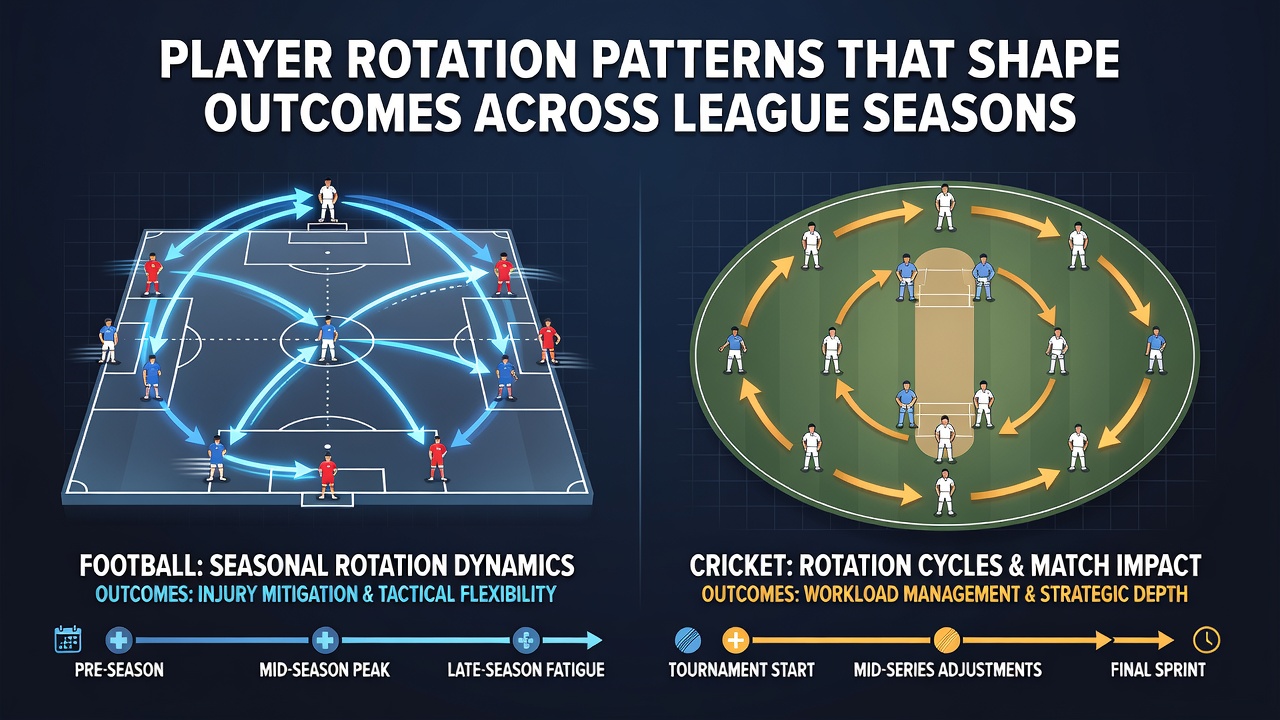
Football and cricket teams across major leagues adjust player availability through planned rotation systems that balance match schedules, injury prevention and performance consistency, and data from multiple seasons shows measurable effects on final standings, according to reports from the Australian Institute of Sport. Managers track workload metrics such as minutes played, travel distance and recovery times to decide lineups, while coaches in both sports rely on similar principles even though the formats differ in duration and physical demands.
Rotation Practices in Football Leagues
Premier League and European domestic competitions run from August through May, which forces clubs to manage 50-plus matches when cup ties are included, and rotation becomes essential once squads reach the knockout stages of UEFA events. Teams that distribute playing time across a 25-player core group maintain higher average sprint distances in the final third of the season compared with sides that rely on the same starters week after week, figures released by the European Club Association indicate. Mid-table clubs often rest key defenders before midweek fixtures against direct rivals, whereas title contenders rotate attacking midfielders to preserve freshness for weekend derbies.
Goalkeepers rarely rotate unless injury intervenes, yet outfield patterns show clear trends: full-backs switch sides or drop to the bench after consecutive 90-minute appearances, central midfielders receive scheduled rest days during international breaks, and forwards who feature in both domestic cups and continental ties frequently miss one league round. These adjustments correlate with fewer soft-tissue injuries reported in the January-to-March window, when fixture congestion peaks.
Cricket Workload Management Across Formats
Test series, limited-overs internationals and franchise T20 leagues overlap between October and March in several countries, so national boards and IPL franchises coordinate rest periods for fast bowlers whose workloads exceed 300 overs in a calendar year. Research compiled by Cricket Australia demonstrates that bowlers who bowl more than 15 overs in three consecutive matches record a 40 percent higher incidence of side strains, prompting selectors to insert specialist spinners or part-time options during day-night games. Batters also rotate, particularly those who travel between hemispheres for back-to-back bilateral series, with data from the England and Wales Cricket Board showing reduced batting averages after three consecutive tours without a scheduled break.
July 2026 marks the traditional off-season window in both hemispheres, when county and state teams finalise pre-season conditioning blocks, and analysts already note increased use of GPS-tracked sessions to set individual rotation thresholds before the next round of league fixtures begins. Franchise owners in South Africa and the Caribbean have adopted similar monitoring tools ahead of their domestic T20 competitions that run through the southern-hemisphere summer.
Comparative Outcomes Across Seasons
Clubs and boards that publish annual workload reports reveal consistent patterns: sides finishing in the top four of football leagues rotate at least three outfield positions every fourth match on average, while lower-placed teams maintain more static lineups until results deteriorate. In cricket, teams that win multi-format bilateral series rotate their pace attack at least once per three-match leg, preserving strike rates above 28 in the closing overs of the decider. These statistics emerge from aggregated match data rather than single games, allowing observers to track long-term correlations between rotation frequency and points totals.
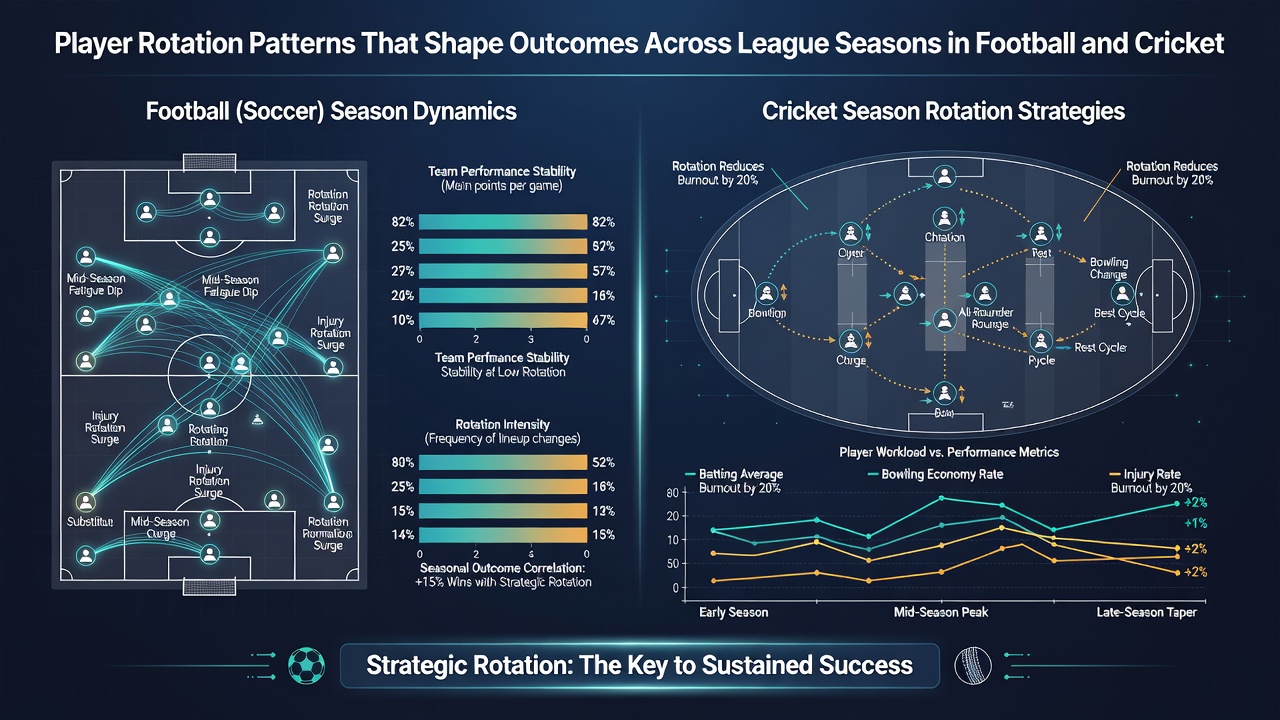
One documented case involves a European club that altered its central-defender pairing schedule midway through a title race, resulting in a 12 percent drop in goals conceded during the run-in, according to UEFA technical reports. A comparable adjustment occurred in an Indian Premier League franchise that rested its leading wicket-taker before the playoffs, after which the same bowler claimed career-best figures in the final. Such examples illustrate how rotation decisions made months earlier shape outcomes once knockout stages arrive.
Data Sources and Measurement Tools
Performance analysts combine GPS units, heart-rate monitors and video tagging to quantify external load, while medical staff cross-reference these numbers with internal load markers such as sleep quality and muscle soreness scores. The International Cricket Council publishes quarterly workload guidelines that national selectors consult when finalising touring parties, and several European football federations now require clubs to submit anonymised rotation logs as part of licensing audits. Academic studies from the University of Queensland further link optimal rotation intervals to reduced soft-tissue injury rates across both sports, providing an evidence base that coaching staffs reference during pre-season planning meetings.
Conclusion
Player rotation patterns in football and cricket continue to evolve as technology supplies more granular data, yet the core objective remains unchanged: distribute physical demands so that squads reach the decisive weeks of each campaign at full capacity. Teams and boards that integrate these systems record fewer long-term absences and sustain competitive results through congested calendars, demonstrating that measured rotation forms a structural component of success across league seasons.