Substitution Tactics: Key to Unlocking Victories in Football and Cricket Competitions Worldwide
Sam Zimmermann · Jul 20, 2026

Substitution Tactics: Key to Unlocking Victories in Football and Cricket Competitions Worldwide
Coaches across football and cricket have long relied on substitution tactics to shift momentum, manage player fatigue, and exploit opponent weaknesses during high-stakes competitions worldwide. These decisions often determine outcomes in leagues and tournaments where small adjustments compound into decisive advantages, especially as matches progress into later stages and physical demands intensify.
Understanding Substitution Rules in Football
Football governing bodies set clear parameters for substitutions that teams must navigate carefully during matches. FIFA regulations allow up to five substitutions in most competitions since 2020 adjustments, though some tournaments extend this number further under specific conditions. Teams typically deploy these changes to introduce fresh attackers when chasing goals or reinforce defensive structures when protecting leads, while timing plays a critical role because once a player exits the field they cannot return in standard league play.
Analysts track patterns showing that successful clubs often make their first substitution between the 60th and 75th minute, aligning with data that indicates declining sprint performance among starters after that window. This approach helps maintain high-intensity pressing and quick transitions that define modern tactical systems.
Substitution Strategies in Cricket Formats
Cricket competitions apply different substitution frameworks depending on the format, from Test matches with limited impact player options to limited-overs games that permit designated replacements for specific roles. The International Cricket Council introduced concussion substitutes as a permanent measure following trials, allowing teams to replace injured players without penalty when medical assessments confirm the need. In T20 and ODI events, squads also name impact players who can swap in for batting or bowling duties, creating opportunities to optimize lineups based on pitch conditions and match situations that unfold during play.
Captains and coaches study opposition bowling attacks and fielding restrictions to decide when to activate these changes, often saving them for death overs where power-hitting specialists can accelerate scoring rates. Data from major tournaments reveals that teams using impact players strategically in the final 10 overs record higher win percentages compared to those who exhaust options earlier.
Case Examples from Global Competitions
Take one manager who orchestrated a late substitution in a European league match that turned a 1-1 draw into a 2-1 victory by bringing on a speedy winger who exploited tired full-backs. Similar patterns appear in cricket where a captain introduced a death bowler as an impact player during a bilateral series, restricting the opposition to under 150 runs in a chase that had looked comfortable moments earlier.
Observers note that July 2026 schedules include several international windows where these tactics will face tests in qualifying events and bilateral series, with teams preparing detailed contingency plans for humid conditions and travel fatigue that affect player recovery between matches. Research from sports science departments at institutions like the University of Queensland highlights how hydration and workload management through timely substitutions reduce injury rates across both sports during extended summer tours.
Data and Performance Indicators
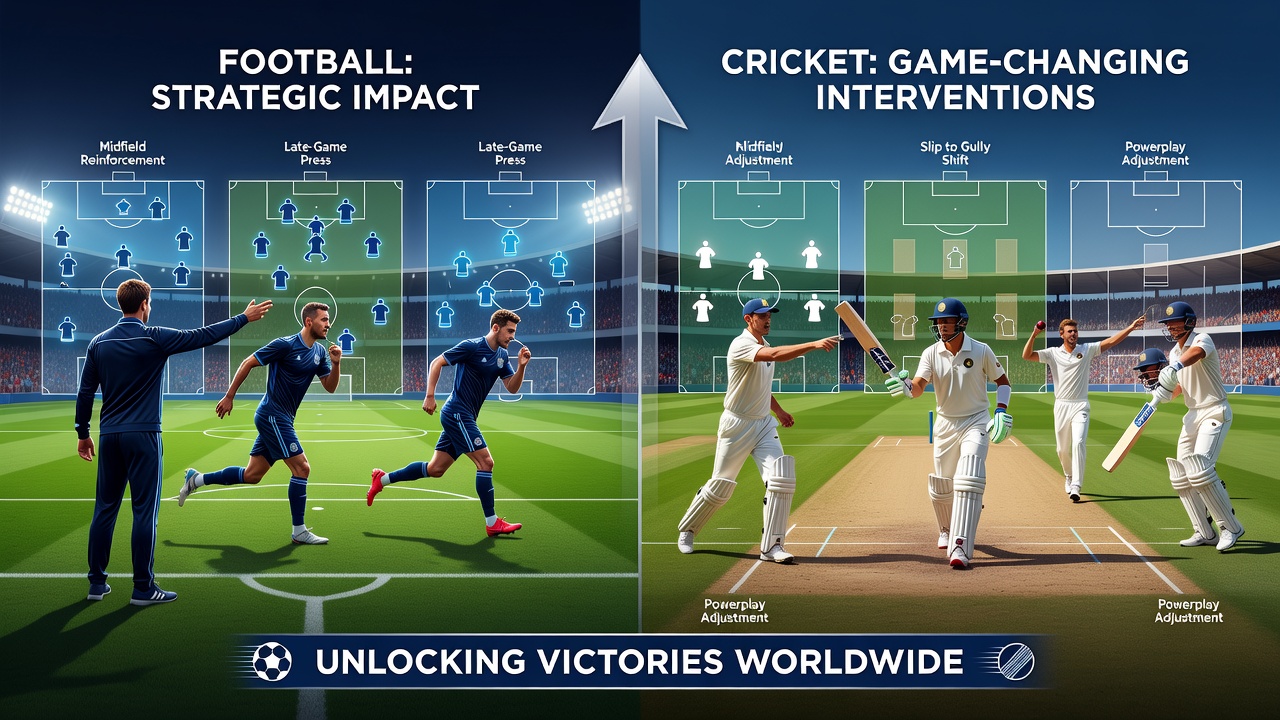
Statistics compiled by organizations such as the Australian Institute of Sport demonstrate that football teams making three or more substitutions maintain possession percentages above 55 percent in the final 20 minutes more consistently than those limited to fewer changes. In cricket, figures from the ICC show that sides activating impact players for specialist roles achieve run-rate improvements averaging 1.8 per over in the powerplay phases that follow.
These metrics emerge from detailed tracking systems that log player movements, heart-rate data, and tactical adjustments across thousands of matches each season. Coaches integrate this information into pre-match preparations and in-game decisions, creating feedback loops that refine future substitution choices based on historical performance against similar opponents.
Conclusion
Substitution tactics continue to evolve as technology provides deeper insights into player metrics and match dynamics across football and cricket. Teams that master timing, personnel selection, and role-specific deployments gain measurable edges in competitions that stretch across continents and multiple formats. As schedules advance into 2026 and beyond, these strategies remain central to how squads convert preparation into on-field results.